 Tamil Nadu
 Karnataka
 Kerala

Your Eyes Deserve Better Than a Routine Check-Up
Most of us take our vision for granted until something changes. A sudden blurriness when you read, a halo around street lights at night, or noticing you're squinting more than you did before. Tiny moments like that are your eyes pleading for attention.
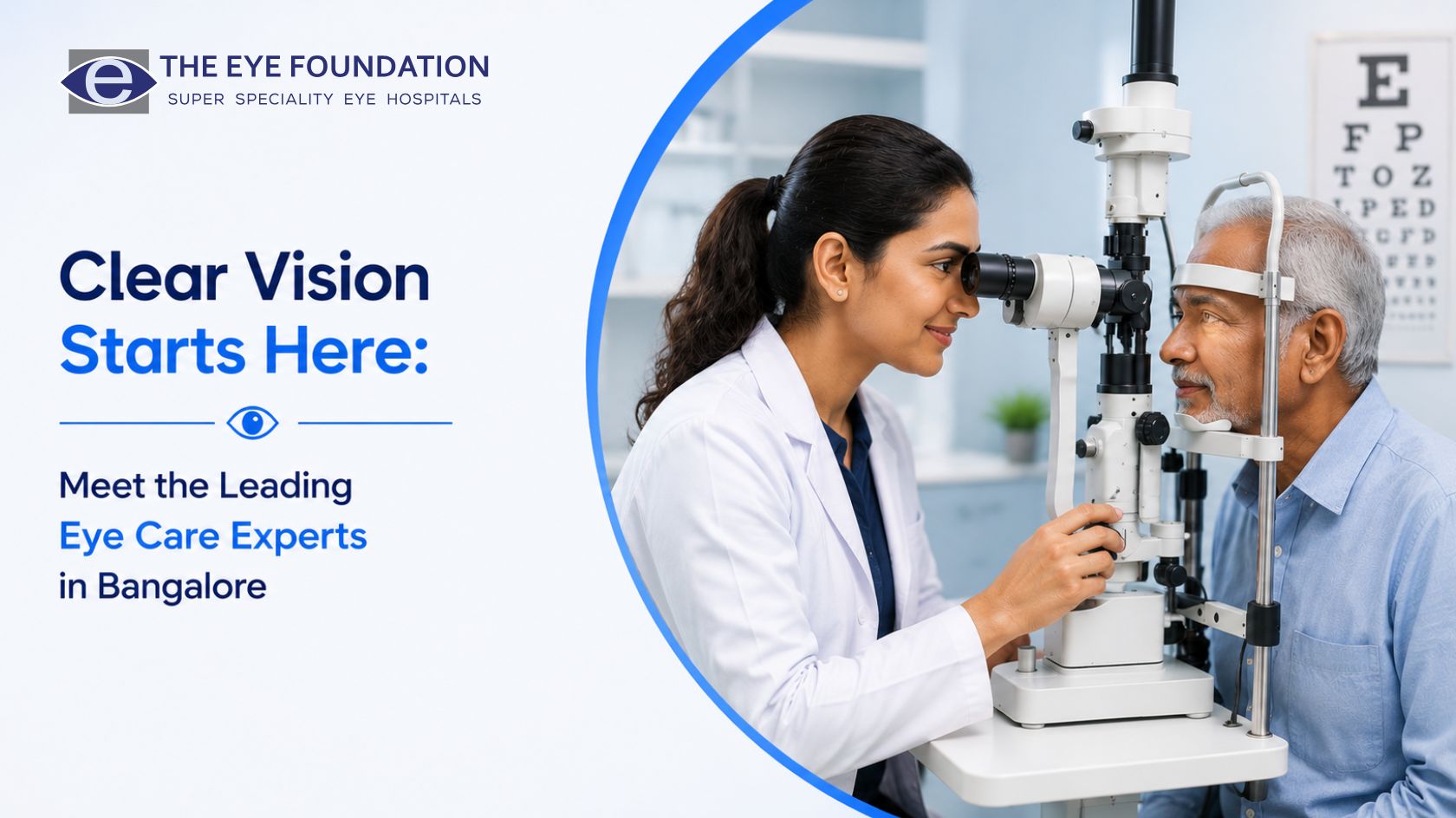
Selecting the right eye care experts in Bangalore can make all the difference – not just in the treatment you receive, but in the confidence you feel throughout the entire process. This is exactly what The Eye Foundation has built its reputation on: exceptional clinical expertise delivered with genuine warmth and patient-first care.
Why Specialised Eye Care Matters
The eye is one of the most complex organs in the human body, and conditions affecting it can range from the simple needing a new spectacle prescription to the serious, like glaucoma or retinal detachment. Seeing a general physician for an eye complaint is a bit like consulting a GP for a complex cardiac condition. You’ll get information, equipment and treatment options that aren’t available from a general practice, from Eye Care Experts in Bangalore.
In a city like Bangalore, with the rise of myopia, digital eye strain and early onset dry eye due to screens and city living, access to qualified and experienced ophthalmologists has become all the more important. This is why many patients choose Eye Care Experts in Bangalore for comprehensive diagnosis, treatment, and long-term vision care.
Understanding Common Eye Conditions
Refractive Errors
Myopia (short-sightedness), hyperopia (long-sightedness), and astigmatism are the most common reasons people visit an eye clinic. Left uncorrected, they affect not just clarity of vision but also academic performance in children, productivity in working adults, and quality of life in older individuals.
Cataract
A cataract is a clouding of the natural lens inside the eye most commonly a result of ageing, though it can also follow injury or prolonged medication use. It is the leading cause of reversible blindness worldwide. The good news is that modern cataract surgery is one of the safest and most successful surgical procedures in medicine today.
Glaucoma
Often called the 'silent thief of sight', glaucoma damages the optic nerve usually through raised intraocular pressure without causing noticeable symptoms in its early stages. By the time vision loss becomes apparent, significant and irreversible damage may have occurred. Early detection through regular eye pressure and nerve checks is the only reliable protection.
Diabetic Retinopathy
For the millions of Indians living with diabetes, the retina is a silent casualty. High blood sugar damages the tiny blood vessels that supply the retina. These vessels leak fluid, swell up and in advanced cases grow new vessels that can cause sudden loss of vision.
Annual retinal screening is essential for every diabetic patient.
Age-Related Macular Degeneration (AMD)
AMD affects central vision the part used for reading, recognising faces, and detailed work. It becomes more common after 50 and progresses more rapidly without specialist monitoring and treatment.
Causes and Risk Factors for Eye Disease
- Age: Many serious eye conditions cataract, glaucoma, AMD become significantly more common after 40.
- Diabetes and hypertension: Both directly damage blood vessels in the retina and can cause progressive, serious vision loss.
- Family history: Glaucoma and AMD have strong genetic components if a parent or sibling has been diagnosed, your risk is elevated.
- High myopia: Severe short-sightedness has a higher risk of retinal tears, detachment and early glaucoma.
Extended screen time Causes digital eye strain, and may hasten myopia progression in children.
- UV exposure: More sun exposure without protective eyewear increases risk of cataract and macular degeneration.
- Smoking: doubles risk of AMD and significantly increases risk of cataract.

Warning Signs and Symptoms You Should Not Ignore
Usually your eyes will tell you when something is wrong if you know what to look for:
- Blurred vision that doesn’t go away with blinking
- Sudden loss of vision in one or both eyes .
- Flashes of light or shower of new floaters
- A shadow or curtain in some part of your vision
- Eye pain, redness or discharge
- Dual View
- Low-light vision impairment
- Frequent headaches when doing near-vision work
But any of these symptoms should be evaluated quickly, not 'wait and see. The Eye Foundation, Bangalore; has specialists on call for emergency consultations and same day appointments for acute presentations.
Diagnosis and Evaluation – What to Expect
An eye exam at The Eye Foundation is much more than checking the vision chart. The assessment may include:
Depending on your age, symptoms and risk factors:
- Eye chart test: This is the regular test that measures how well you can see things at different distances.
- Refraction assessment: Determines your precise prescription for spectacles or contact lenses.
- Slit-lamp exam: A slit-lamp exam provides a detailed view of the cornea, lens and front surface of the eye.
- Tonometry (measurement of intraocular pressure): Tests for glaucoma.
- Dilated fundus examination - After the pupil is dilated, the retina, optic nerve and macula are examined.
- OCT (Optical Coherence Tomography): Non-invasive cross-sectional scan of the retina and optic nerve – the MRI of the eye.
- Visual field testing: maps peripheral vision to detect glaucoma and neurological conditions.
- Corneal topography: Maps the shape of the cornea, important before LASIK or lens implant surgery.
Spectacles & Contact Lens
The foundation of good vision for refractive errors is an accurate and up-to-date prescription from a specialist optometrist. The Eye Foundation’s optical dispensing team helps patients choose the right lens technology for their lifestyle, from daily-wear contact lenses to anti-fatigue progressive eyeglasses. With the support of Eye Care Experts in Bangalore, patients receive personalized vision solutions tailored to their unique needs and daily activities.
Refractive surgery / LASIK
LASIK and its advanced variants (SMILE, Contoura LASIK, PRK) provide precise, safe and long-lasting correction of myopia, hyperopia and astigmatism for patients who desire freedom from glasses and contact lenses. However, not all patients are candidates and a careful pre-operative assessment is required to ensure safety and optimal results.
Premium lens implants during cataract surgery
Cataract surgery (phacoemulsification) is a modern surgical technique involving the use of ultrasound energy to remove the cloudy lens through a small incision and replace it with a clear artificial lens. Premium intraocular lenses (multifocal, toric, extended depth of focus) can correct not only the cataract but also pre-existing refractive errors, which can potentially give patients spectacle free vision after surgery.
Managing Glaucoma
The treatment depends on the type and stage of glaucoma and may include eye drops to reduce intra-ocular pressure, laser therapy (SLT or iridotomy) or surgery (trabeculectomy, MIGS). The goal is to preserve the remaining vision, which is why early detection and consistent follow-up are so important.
Treatments of the retina
Retinal conditions such as diabetic retinopathy, macular degeneration and retinal detachment require subspecialist care. These are managed by The Eye Foundation’s retinal team with intravitreal injections (anti-VEGF therapy), laser photocoagulation and vitreoretinal surgery as appropriate.
Cutting Edge Technology and Advanced Eye Care
The Eye Foundation – Bangalore has some of the most sophisticated diagnostic and surgical platforms available in India today:
Femtosecond laser assisted cataract surgery (FLACS): Robotic precision for each and every step of cataract surgery, reducing the variability of the manual technique.
SMILE (Small Incision Lenticule Extraction) – Minimally invasive, flapless alternative to LASIK for correcting myopia.
Wide-field retinal imaging: One image of the peripheral retina (no dilation required) for detailed screening.
AI-assisted screening for glaucoma and diabetic retinopathy: facilitating high volume, high accuracy screening with specialist review.
Swept-source OCT: This is the newest type of OCT that allows deeper tissue penetration for imaging of the posterior segment.
Why The Eye Foundation – Bangalore
Subspecialist Experience: At The Eye Foundation, every ophthalmologist has a specialised field of practice, whether it is cornea, retina, glaucoma, oculoplastics or paediatric ophthalmology, bringing the depth of a specialist to every consultation.
Trust built over decades For more than 30 years The Eye Foundation has been serving patients all over South India with a proven record of clinical excellence.
Patient-centred approach:
As soon as you walk in the team listens, explains, and ensures that you leave clear in vision and understanding of your condition.
- Whole health: This is where glasses, surgery, or management of a chronic condition lives.
- Clear communication: Patients and families are always told what is happening, why and what to expect – no medical jargon, no confusion.
Clear, healthy vision is not something to leave to chance or to delay. Whether it’s worry about your eyesight changing, managing a long-term condition, or just time for your routine check-up, the eye care experts at The Eye Foundation, Bangalore, are here to help you see your world clearly and confidently.
Schedule your comprehensive eye exam today. Your vision matters.
FAQ’s
1. How often should I have my eyes examined even when my vision appears normal?
Adults with no known risk factors should have a comprehensive eye exam every 2 years. People with diabetes, high blood pressure, a family history of glaucoma, or anyone over the age of 40 should have an annual eye exam. Children should be screened before starting school and periodically thereafter.
2. At what age should children have their first eye exam?
Children should have their first formal eye test between 3 and 4 years old before starting school. Untreated refractive errors in young children can lead to amblyopia (lazy eye), which is much harder to treat if not picked up early.
3. Is LASIK eye surgery safe? What are the risks in the long run?
LASIK is very safe when performed by experienced surgeons on the right patients with modern technology. Serious complications are infrequent. The secret is a comprehensive pre-operative assessment - not every eye is a candidate, and The Eye Foundation's refractive team makes sure candidates are comprehensively vetted.
4. Is there a cure for glaucoma?
There is no cure for glaucoma, but it can be treated very well. “Vision lost cannot be regained, but proper therapy can significantly slow progression – which is why early detection is so important.”
5. How can I tell if my child has a vision problem?
Common symptoms include sitting very close to the TV or screen, squinting, frequently rubbing eyes, one eye turning in or out, complaints of headaches after reading, and reluctance to read or do close work. Any of these need assessment by a specialist.
6. Does the Eye Foundation provide home visits or telemedicine consultations?
Yes. The Eye Foundation provides teleconsulting for advice and follow-up in stable conditions. However, some examinations and procedures must be done in person.
7. Is cataract surgery done under general anesthesia?
Most cataract surgeries are performed under local or topical (eye drop) anesthesia, with the patient awake throughout. The procedure is painless, takes about 15–20 minutes, and most patients go home within a few hours.