 Tamil Nadu
 Karnataka
 Kerala

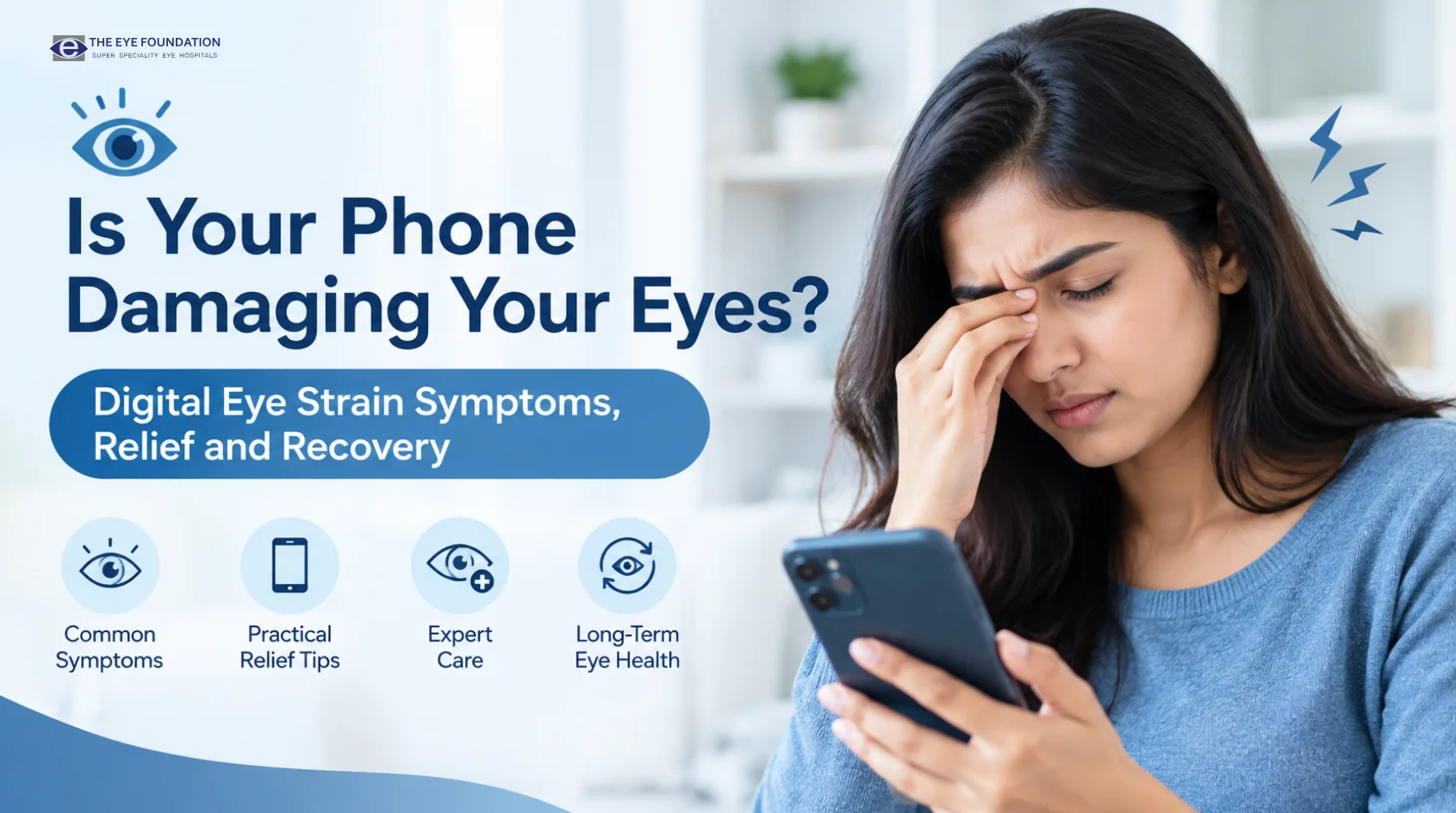
You check your phone first thing in the morning. You work on a laptop all day, scroll through reels on the way home, and end the night watching a series in bed. By 10 pm your eyes feel heavy, dry and a little sore. Sound familiar?
That tired, gritty feeling has a name: digital eye strain, also called computer vision syndrome. It's one of the most common eye complaints today, from office workers to school children. For many people it starts as eye strain from mobile screen time and builds up through the day. The good news is that for most people it's temporary and very manageable once you understand what's going on.
What Is Digital Eye Strain?
Digital eye strain is a group of eye and vision symptoms that show up after long periods of looking at screens: phones, tablets, laptops and TVs. It isn't a disease in itself. It's your eyes telling you they've been working hard without a break.
Here's why screens are so demanding. When you look at something close, the focusing muscles inside your eye have to stay contracted. On a phone, text is small and held close, so those muscles work even harder. That's why eye strain from mobile screen use often feels worse than strain from a laptop or TV. At the same time, most of us blink far less while concentrating on a screen. Fewer blinks means the tear film dries out faster, and that's where the burning and grittiness come from.
Common Symptoms of Eye Strain from Mobile Screens
Symptoms of eye strain from mobile screen use usually build up over the day and ease with rest. The most common ones are:
- Tired, heavy or aching eyes
- Dryness, burning or a sandy feeling
- Blurred vision, especially when you look up from the screen to something far away
- Headaches, often around the forehead or temples
- Watery eyes (yes, dry eyes can water more as they try to compensate)
- Neck, shoulder or back pain from poor posture
- Increased sensitivity to light
If your symptoms disappear after a good night's sleep or a screen-free weekend, strain is the likely culprit. If they don't, it's worth getting checked, because an uncorrected power (refractive error) or an underlying dry eye condition can make screen time feel far worse than it should.

Is Mobile Screen Harmful for Eyes?
This is one of the most searched questions, and the honest answer is reassuring. There's no good evidence that normal phone or computer use permanently damages healthy eyes. The discomfort of eye strain from mobile screen habits is real, but it doesn't cause blindness or lasting harm to the retina.
That said, screen habits do matter in two ways. First, in children, long hours of near work and very little time outdoors are linked to a higher risk of developing and worsening myopia (short-sightedness). Second, heavy late-night use can disturb sleep, which leaves the eyes more tired and dry the next day. So the phone isn't "burning" your eyes, but how you use it still affects how they feel and, for kids, how their vision develops.
Can Eyes Recover from Screen Damage?
In most cases, yes, and fairly quickly. Because eye strain from mobile screen use is about fatigue and dryness rather than structural damage, the eyes usually recover once you give them regular breaks and deal with the dryness. Many people feel better within a few days of changing their habits.
Where recovery stalls, there's often something else going on: glasses that are out of date, a power you didn't know you had, a problem with how the two eyes work together, or chronic dry eye. These are all treatable, but they need an eye examination to pick up.
How to Relieve Eye Strain Fast
You don't need expensive gadgets to ease eye strain from mobile screen time. Small, consistent changes make the biggest difference.
Follow the 20-20-20 rule. Every 20 minutes, look at something about 20 feet (6 metres) away for at least 20 seconds. This relaxes your focusing muscles.
Blink on purpose. Every so often, close your eyes fully and gently, pause for a second, then open. Full blinks spread tears evenly across the eye's surface.
Hold the phone farther away. Keep it at least 40 cm (about 16 inches) from your eyes and slightly below eye level. Increase the font size rather than bringing the screen closer.
Fix your brightness. Your screen shouldn't be much brighter or darker than the room around you. Scrolling in a dark room with a bright screen is one of the fastest ways to tire your eyes.
Use lubricating drops wisely. Preservative-free artificial tears can ease dryness. It's best to ask an eye doctor which one suits you, and avoid "redness relief" drops for regular use.
Protect your sleep. Try to put the phone down 30 to 60 minutes before bed. Better sleep means fresher eyes in the morning.
Eye Strain in Children: What Parents Should Know
Kids rarely complain about tired eyes. Instead, you may notice them rubbing their eyes, squinting, holding the phone very close, sitting close to the TV, or getting headaches after school.
Encourage at least an hour or two of outdoor play each day, set screen-time limits, and schedule regular eye check-ups. Early detection of myopia makes it much easier to manage.
When Should You See an Eye Specialist?
Book an appointment if:
- Symptoms continue even after you've followed the tips above for a couple of weeks
- You get frequent headaches while reading or using screens
- Your vision stays blurry after you stop using the screen
- You see double, or one eye feels much worse than the other
- Your child is squinting, rubbing their eyes often or sitting very close to screens
A comprehensive eye examination checks your power, how your eyes focus and work together, and the health of your tear film, so treatment can target the real cause rather than just the symptoms.
Get Your Eyes Checked at The Eye Foundation
If screen time is leaving your eyes tired and sore, our eye specialists can help you find out why. From precise vision testing and dry eye evaluation to orthoptic assessment for eye coordination problems, The Eye Foundation offers complete eye care across our hospitals in Tamil Nadu, Karnataka and Kerala. Book a comprehensive eye check-up at your nearest branch today.
Frequently Asked Questions
How long does digital eye strain last?
For most people, symptoms ease within a few hours of resting the eyes and improve noticeably within a few days of better screen habits. If they last longer, get an eye examination.
Does blue light from phones damage the eyes?
Current evidence doesn't show that blue light from phones damages the eyes. Eye strain comes mainly from prolonged focusing and reduced blinking, not blue light itself. Blue light at night can, however, affect sleep.
Do I need special computer glasses?
Not everyone does. If you have an uncorrected power or focusing difficulty, glasses prescribed for your working distance can help a lot. An eye test will tell you whether you need them.