 Tamil Nadu
 Karnataka
 Kerala

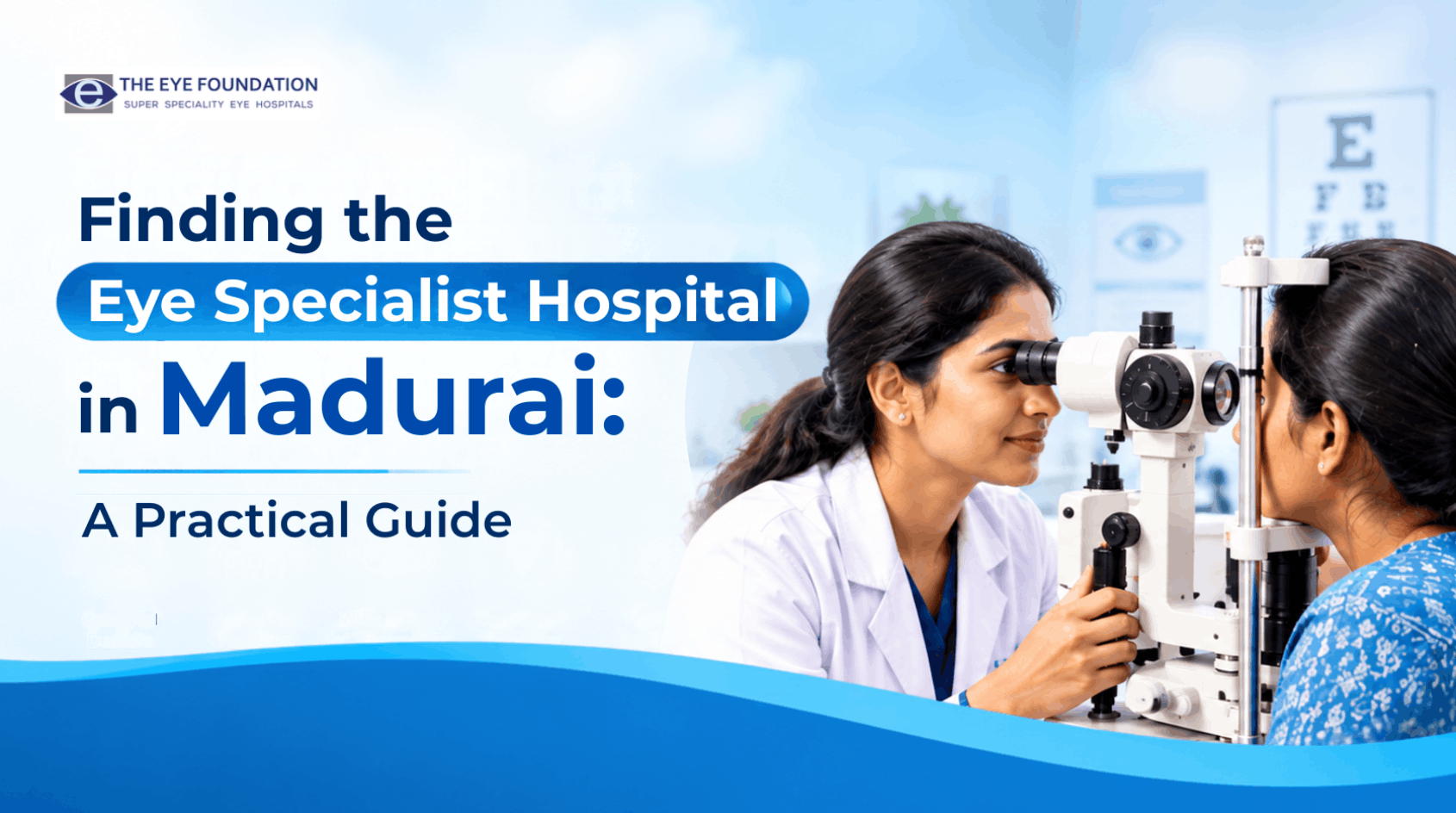
Madurai has quietly become one of the more interesting healthcare stories in Tamil Nadu over the last decade. A city once known mostly for its temples and its textile trade now draws patients from surrounding districts for specialized medical care, and eye treatment is one of the clearest examples of that shift. Still, if you've typed "eye specialist hospital in Madurai" into a search bar recently, you've probably felt a little overwhelmed by the results of a jumble of general clinics, single-doctor setups, and larger hospitals, none of which make it obvious which one actually deserves your trust.
That confusion is understandable. Most people don't think about eye care until something's already wrong, a bit of blurriness while reading, trouble driving after dark, maybe a headache that won't quite go away. By the time you're searching for help, you want answers, not a guessing game about which clinic is legitimate. So it's worth slowing down for a moment and thinking about what actually separates a genuine eye specialist hospital in Madurai from a clinic that just happens to have "eye" in its name.
Start with the basics: what conditions does the hospital actually treat, beyond routine eye tests and glasses prescriptions? Cataracts are still the leading cause of treatable blindness in India, and Madurai's growing elderly population means the demand for cataract surgery here isn't going anywhere. A hospital that's serious about this should be offering modern phacoemulsification, and ideally femtosecond laser-assisted options too not older manual extraction techniques that come with longer downtime and a rougher recovery. Ask directly what technology they use; a confident answer is usually a good sign.
Diabetic retinopathy is the other big one, and it's honestly the condition I think gets under-discussed. Tamil Nadu has some of the highest diabetes rates in the country, and diabetic eye damage has this frustrating habit of causing zero symptoms in its early stages. Someone can be losing retinal function for months before they notice anything's wrong. A proper eye specialist hospital in Madurai should treat retina screening as a standard part of care for diabetic patients, not something patients have to specifically ask for.
Pediatric eye care doesn't get nearly enough attention either. Conditions like squint, lazy eye, and uncorrected refractive errors are far easier to treat when caught early ideally before age seven or eight. Kids can't always tell you something's wrong; they just adapt to blurry vision without realizing it isn't normal. Hospitals with a real pediatric ophthalmology setup, staffed by people who know how to keep a fidgety six-year-old still long enough for a proper exam, catch problems a rushed adult-oriented visit would miss.
There's also something to be said for continuity of care. A lot of families in Madurai are juggling eye needs across generations at once a grandparent needing cataract surgery, a parent dealing with early presbyopia, a kid who just failed a school vision screening. Finding one eye specialist hospital in Madurai that can handle all of that under one roof, with consistent records, saves an enormous amount of hassle over the years.
Infrastructure is worth asking about too. Does the hospital have its own operation theatre, or does it quietly refer surgical cases elsewhere? An in-house OT usually means faster scheduling, more accountable follow-up, and a surgical team that actually owns the outcome. Surgeon training matters just as much for complex cases like advanced glaucoma or retinal detachment, you want someone with focused, fellowship-level training, not just general practice experience.
Before choosing where to go, it's worth running through a short checklist:
- Does the hospital have an in-house operation theatre for surgical cases?
- Is the surgeon fellowship-trained in the relevant subspecialty?
- Is diabetic retina screening offered as standard, not an add-on?
- Is there a proper pediatric ophthalmology setup for children?
- Can you move from consultation to treatment quickly if something's urgent?

What to Check | Why It Matters |
In-house surgical facility | Faster scheduling, accountable follow-up |
Fellowship-trained surgeons | Better outcomes on complex cases |
Diabetic retina screening | Catches silent damage before symptoms show |
Pediatric ophthalmology | Early detection while treatment is easiest |
Multi-generational records | One consistent history for the whole family |
The good news is that Madurai genuinely has more capable options today than it did five years ago. The work now is mostly about looking past the surface-level marketing and asking a handful of pointed questions before trusting somewhere with your vision. A real eye specialist hospital in Madurai will have the equipment, the trained staff, and the track record to back the claim up and they generally won't mind you asking to see it. If there's one thing worth remembering, it's that when you finally do choose an eye specialist hospital in Madurai, "specialist" should mean something concrete, not just a word on a signboard.