 Tamil Nadu
 Karnataka
 Kerala

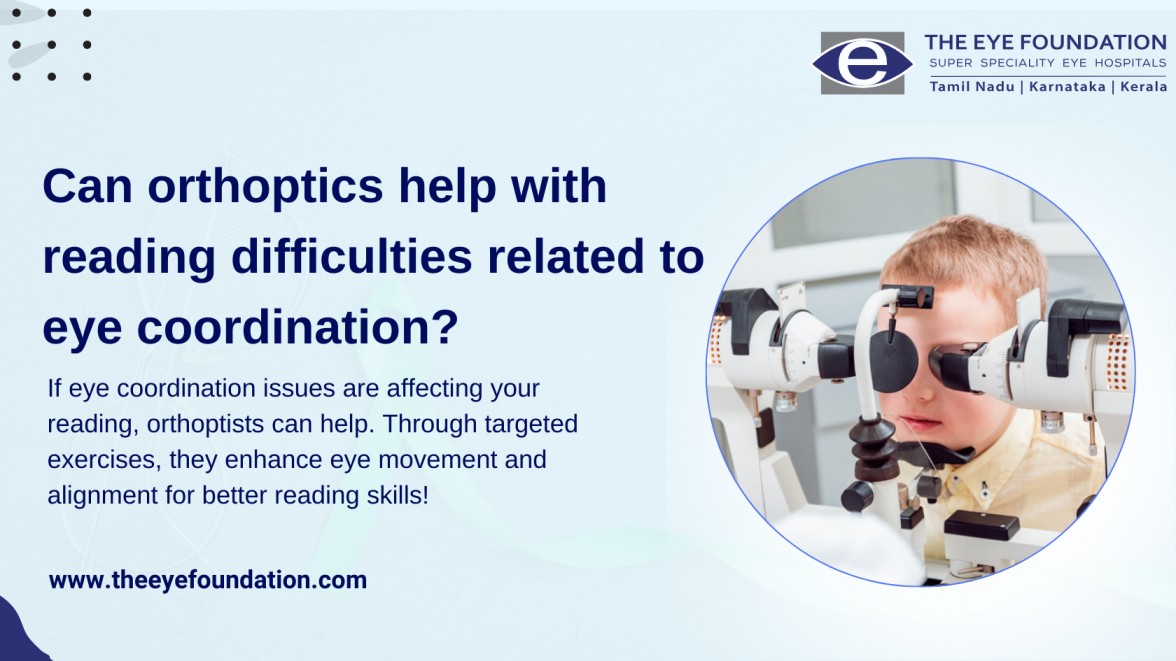
Literacy is an essential competency in everyday life, however, for many learners, particularly children, reading problems may originate from an optical deficit. Less appreciated, dysfunctions in eye coordination may affect how fluently we read, how well we understand and interpret the content, or even both. A branch of eye care known as orthoptics may offer solutions because it involves the position, movement, and focusing of the eyes. This article looks at how orthoptics can help those with reading problems due to eye coordination problems and why it would be a good idea.
What Are Reading Difficulties Related to Eye Coordination?
Problems in eye coordination that cause reading difficulties include convergence insufficiency, strabismus or other binocular vision disorders. Dysmetropia is a condition in which the two eyes have difficulty in working in harmony, and this causes eye strain, double vision, blurred vision and difficulty in following lines of text.
Some common signs of reading difficulties caused by eye coordination issues include:
- They are often confused about their position while reading.
- Lack of concentration on the content of the page
- Forgetting what was said and having to go back over lines to get the point of the text.
- Symptoms such as headaches or fatigue of the eyes during reading.
- Less understanding when reading for a long time
Such symptoms can hinder learning and reading confidence largely in young children who are in the initial stages of learning to read.
How Does Orthoptics Address Eye Coordination Issues?
Orthoptics is a specialty of the eye care that is mostly concerned with the assessment and management of the binocular vision and eye movement. The professionals in this field are orthoptists who in most cases collaborate with optometrists and ophthalmologists to develop treatment plans that would enhance the way the eyes work.
Orthoptics treatment often involves:

- Eye Exercises: Orthoptists advise their patients on the correct exercises that can help improve the muscles of the eye and the focusing mechanism as well as eye coordination. These exercises are meant to improve the eyes’ capacity to track and converge well on reading content.
- Prism Glasses: Sometimes, the orthoptists prescribe the use of prism glasses to realign the light entering the eyes so as to correct squinting and general eye movement.
- Vision Therapy Programs: Vision therapy is a coordinated and prescribed treatment that may involve the use of certain equipments, computer programs, and prescribed activities. Vision therapy is very effective in children because it involves activities which are friendly and challenging to help the child gain control of his or her eyes.
- Lifestyle and Ergonomic Adjustments: Some of the ways that orthoptists may suggest are changes in reading habits such as brightness of the screen, size of the fonts and even the posture when reading.
Evidence Supporting Orthoptics for Reading Difficulties
There is evidence indicating that orthoptics helps in management of symptoms arising from eye coordination difficulties that affect reading. Research indicates that children and adults with CI, for example, can benefit significantly with structured vision therapy in terms of reading rate, comprehension, as well as reduced eye strain and discomfort.
A study conducted by the American Optometric Association reveals that vision therapy including orthoptic exercises will definitely enhance reading ability since it corrects convergence problems. Therefore, orthoptic treatment for patients helps them to have fewer symptoms like eye strain and headaches thus a positive reading experience.
Who Can Benefit from Orthoptics for Reading Difficulties?
Orthoptics is useful for people of all ages who have reading problems due to eye coordination disorders. Students who have not been diagnosed with convergence problems may benefit especially since these problems affect learning and self esteem. However, those adults who have problems with eye cooperation and other symptoms that appear during reading can be treated with orthoptic treatment.
Signs that orthoptics might be helpful include:
- Ongoing difficulty with reading attention and eye strain
- Holding both eyes on one line or difficulty in centering text
- Some of the signs that are associated with eye strain and hinder normal functioning of day to day activities.
- Previous diseases such as strabismus or amblyopia, also known as lazy eye
For those who identify these signs, the first port of call is an orthoptist or an optometrist. An ophthalmologist can diagnose specific problems with eye coordination, and then prescribe appropriate orthoptics or other treatments.
Practical Tips for Supporting Better Reading Skills
In addition to orthoptics, there are simple strategies that can help improve reading comfort and performance:
Regular Eye Breaks: The idea is to remind the users to take breaks every 20 minutes to ease eye strain.
Proper Lighting: Reading should take place under good light to avoid making eye strain even worse.
Maintain a Healthy Reading Distance: Place books or screens at a comfortable distance which is equal to the length of an arm.
Ergonomics: Also, when reading, one should maintain a good posture to reduce unnecessary pressure on the eyes.
They can be used to prevent eye problems and support those who experience difficulties with eye coordination.
Conclusion
Orthoptics is a useful and sometimes even lifesaving procedure for people experiencing problems with reading due to eye coordination. By using exercises, therapy and specific treatments orthoptics can help to relieve symptoms such as eye strain and to enhance the co-ordination of the two eyes in reading as well as the comprehension of the read text.
If you or someone you know has difficulties that can be associated with reading and eye coordination, you might want to consider orthoptic treatment. The Eye Foundation provides thorough assessments and develops unique orthoptic management plans which can help improve eye teaming and reading abilities. Book your appointment today!