 Tamil Nadu
 Karnataka
 Kerala

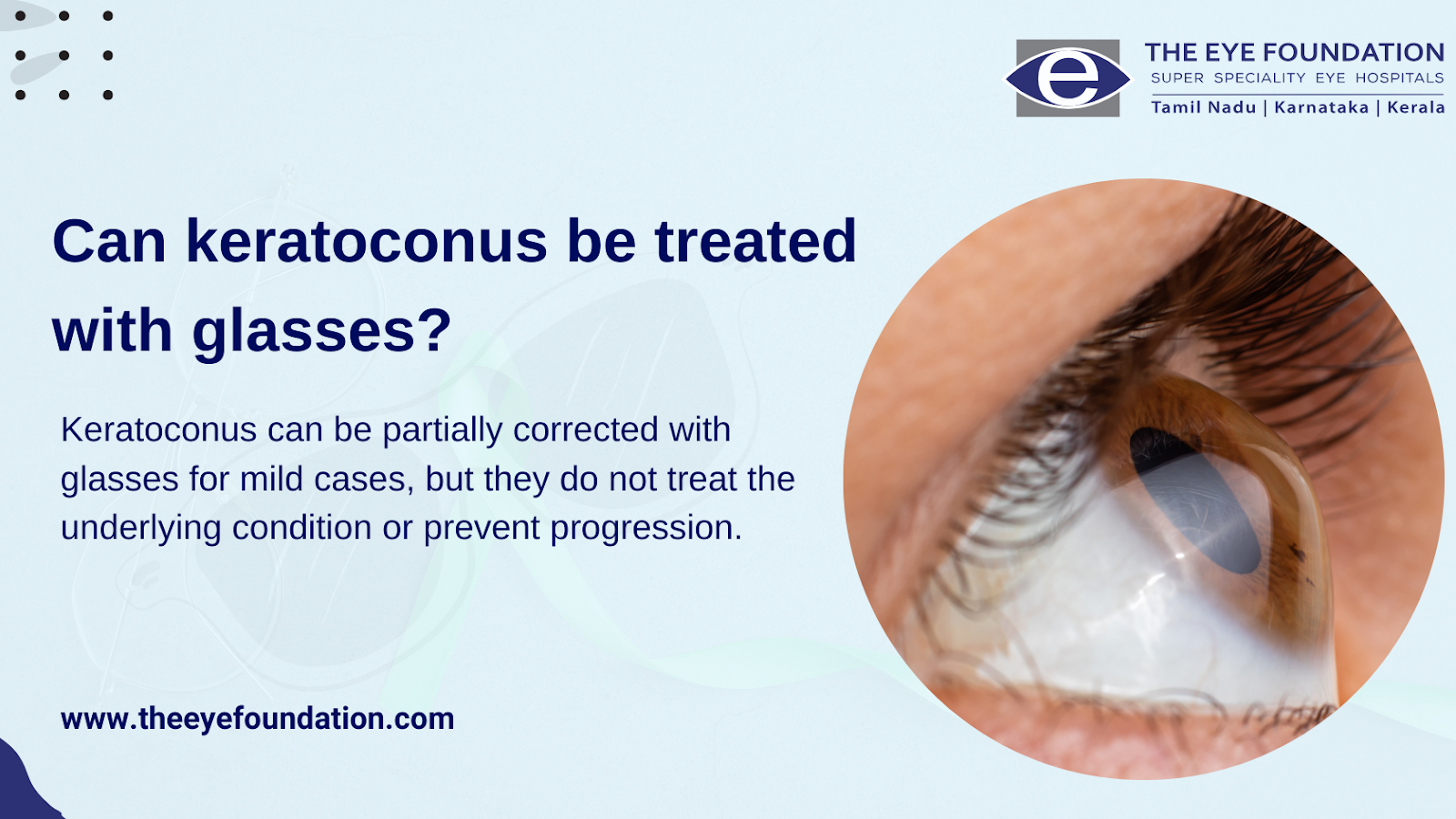
Keratoconus is an eye condition where the cornea, the clear front surface of the eye, thins and bulges into a cone-like shape, causing distorted vision. This blog explores whether glasses can effectively treat keratoconus and offers insights into available treatment options.
Understanding Keratoconus
Keratoconus affects the cornea, leading to vision problems. Here’s a closer look at this condition:
- Corneal Thinning: The cornea becomes thin and gradually bulges outward into a cone shape.
- Visual Distortion: This abnormal shape distorts vision, causing issues like blurred vision, light sensitivity, and glare.
- Progression: It usually starts in adolescence and may progress over time.
Can Glasses Correct Keratoconus?
While glasses are commonly used to correct vision issues, their effectiveness in treating keratoconus is limited. Here’s why:
- Early Stages: In the early stages of keratoconus, glasses can correct mild vision problems. They may help improve vision by compensating for some irregularities in the cornea.
- Advanced Stages: As keratoconus progresses, glasses become less effective. The cornea’s irregular shape cannot be adequately corrected with standard lenses, leading to persistent visual distortions.
For individuals seeking advanced treatment options, Eye Hospital in Kochi offers specialized care and cutting-edge solutions to manage keratoconus effectively.
Alternatives to Glasses for Keratoconus
When glasses aren’t sufficient, other treatments can help manage keratoconus effectively:

1. Contact Lenses
- Rigid Gas Permeable (RGP) Lenses: These hard lenses provide a smooth surface over the irregular cornea, improving vision.
- Hybrid Lenses: Combine a rigid center with a soft outer ring for comfort and better vision correction.
- Scleral Lenses: Large lenses that vault over the cornea, resting on the sclera (the white part of the eye), offering improved vision and comfort.
2. Corneal Cross-Linking
- Strengthening the Cornea: This minimally invasive procedure strengthens corneal tissue to halt progression.
- UV Light and Riboflavin: The treatment uses ultraviolet light and riboflavin (vitamin B2) drops to strengthen the cornea’s collagen fibers.
3. Intacs
- Corneal Inserts: Small plastic inserts are placed in the cornea to flatten its shape, improving vision.
- Minimally Invasive: This is a quick and relatively simple procedure that can delay the need for corneal transplant.
4. Corneal Transplant
- Severe Cases: In advanced stages, when other treatments aren’t effective, a corneal transplant may be necessary.
- Replacing the Cornea: The damaged cornea is replaced with a healthy donor cornea, restoring vision.
Points to Consider When Choosing Treatment
When deciding on the best treatment for keratoconus, consider the following:
- Severity of Condition: Early stages may benefit from glasses or contact lenses, while advanced stages may require surgical intervention.
- Lifestyle and Comfort: Evaluate how each option fits your lifestyle and comfort preferences.
- Consultation with an Eye Specialist: Always discuss with an eye care professional to determine the most suitable treatment plan.
Schedule an Appointment with The Eye Foundation
If you or someone you know is experiencing symptoms of keratoconus, early diagnosis and treatment are crucial. Schedule an appointment with The Eye Foundation to explore the best treatment options and protect your vision. Our team of experts is here to provide comprehensive care and support for all your eye health needs.