

 Tamil Nadu
 Karnataka
 Kerala

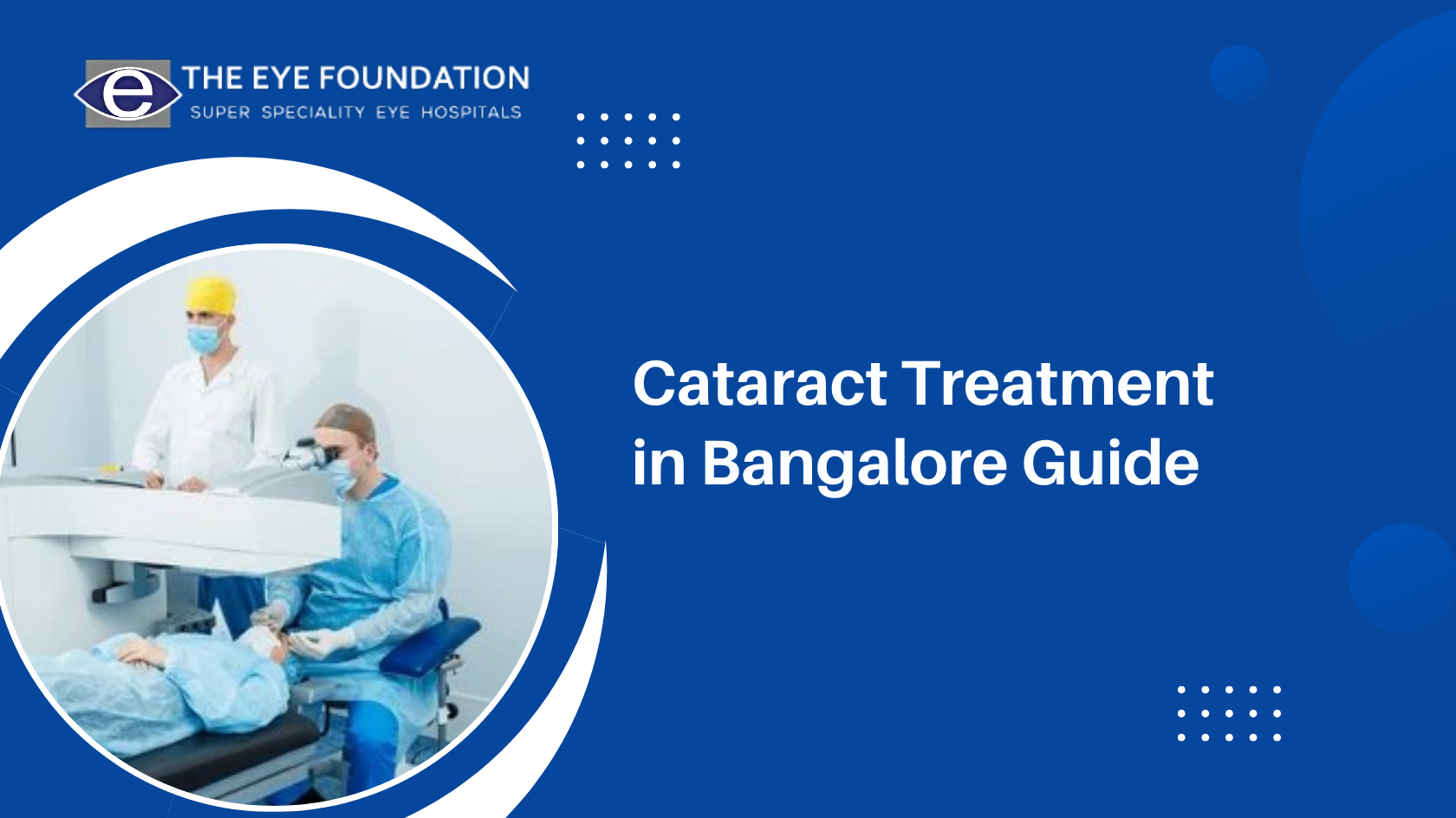
Cataracts are the most common cause of treatable blindness in India, affecting millions of people every year. The silver lining: Cataract Treatment in Bangalore is now more advanced, accessible and safe than ever before. Today, surgical techniques boast a success rate of more than 98%, and most patients experience a dramatic improvement in vision within 48 hours of the procedure.
Whether you’ve just been diagnosed or have been wearing glasses for a long while, knowing the full story about Cataract Treatment in Bangalore will allow you to face the process confidently, not fearfully.
What is a cataract, exactly?
Inside the eye is a natural lens a clear structure just behind the pupil that focuses light on the retina. The lens of a healthy eye is crystal clear. A cataract is formed when the proteins in the lens start to aggregate and the lens becomes cloudy or opaque.
This clouding scatters and blocks light rather than transmitting it cleanly to the retina, resulting in blurred, hazy, or dim vision. Colours may appear faded or yellowed. Bright lights cause glare or halos. Reading fine print becomes progressively harder.
Most cataracts are related to age and are a part of the normal ageing process. Diabetes, long-term steroid use, eye injury or radiation exposure are other causes. Some cataracts are present from birth (congenital cataracts).
How is cataract surgery done in Bangalore?
The only effective treatment for cataracts is surgical removal of the cloudy lens and replacement with a manmade intraocular lens (IOL). No eye drops, medication, or exercise can reverse a cataract once it has formed.
Phacoemulsification the gold standard
Phacoemulsification (commonly called "Phaco") is the most widely used technique for cataract surgery in Bangalore. A micro-incision of 2–2.8 mm is made at the edge of the cornea. A thin probe emitting ultrasound waves is inserted to break the cloudy lens into tiny fragments, which are gently suctioned out.
The artificial IOL is then folded, inserted through the same micro-incision, and unfurled in the lens capsule no sutures required.
The entire procedure takes 15–20 minutes per eye, under topical (numbing drop) anaesthesia. There is no injection, no patch, and patients go home the same day with clear, protective eyewear.
Femtosecond laser-assisted cataract surgery (FLACS)
FLACS uses a computer-guided femtosecond laser to perform the most precise steps of the surgery including the corneal incision, capsulotomy (opening the lens capsule), and fragmentation of the cataract. This reduces the ultrasound energy used inside the eye, potentially leading to faster healing and even greater accuracy in IOL placement. Colours may look dull or yellowed. Glare or halos from bright lights. And the fine print becomes more and more illegible.
The most common type of cataracts are age-related but cataracts can also be caused by diabetes, long-term steroid use, eye trauma, exposure to radiation or even be present from birth (congenital cataracts).
How is cataract surgery performed in Bangalore?
The only effective treatment for cataracts is surgical removal of the cloudy lens and its replacement with an artificial intraocular lens (IOL).
Pre-operative evaluation — what to expect
- Complete eye examination
- Biometry for IOL power calculation
- Corneal topography analysis
- Endothelial cell count check
- Detailed retinal evaluation
- Blood sugar and blood pressure assessment
- Lens selection guidance (standard or premium IOLs)
- Special consideration for astigmatism patients
Manual small-incision cataract surgery (MSICS)
MSICS has a slightly bigger incision (5–7 mm) and the cataract is removed in one piece rather than emulsified. This is a very effective technique and is used a lot in India, especially for mature cataracts. It is cheaper than phaco and equally safe in experienced hands.
Selecting the appropriate IOL (intraocular lens)
In cataract surgery, an artificial lens is put in your eye and will stay there for the rest of your life. Selecting the appropriate IOL is one of the most important decisions in your treatment journey.. Avoid swimming, dusty environments, and heavy lifting.
Week 2–4: Vision stabilises progressively. Follow up as scheduled.
4–6 weeks: Full visual recovery. New glasses prescription (if needed) can be issued.
Frequently asked questions
1.Can cataracts come back after surgery?
No. Once the cloudy lens is removed, a cataract cannot recur. However, some patients develop a condition called posterior capsule opacification (PCO) months to years later — a clouding of the capsule behind the IOL. This is treated quickly and painlessly with a YAG laser procedure in the clinic.
2.Is cataract surgery covered by insurance?
Yes.Monofocal IOL clear vision at one distance (usually distance). Need reading glasses for close work. Accept Most Insurance Plans.
Multifocal IOL offers vision at multiple distances (near, intermediate, far). Significantly decreases the need for glasses. Premium pricing.
Toric IOL Corrects both the cataract and the astigmatism. Great for patients with a lot of existing astigmatism.
Extended Depth-of-Focus (EDOF) IOL provides a continuous range of sharp vision with fewer halos than multi-focal lenses. Great for intermediate and distance work.
3.At what point should I get surgery?
Surgery is advised when the cataract significantly impacts your daily activities driving, reading, watching television regardless of how "mature" or "immature" the cataract appears on examination. Do not wait for complete vision loss.
4.Can I have both eyes done at the same time?
Most surgeons perform one eye at a time, with a gap of 1–2 weeks, to ensure the first eye recovers well before operating on the second. Bilateral simultaneous surgery is performed in some cases under specific protocols.


