 Tamil Nadu
 Karnataka
 Kerala

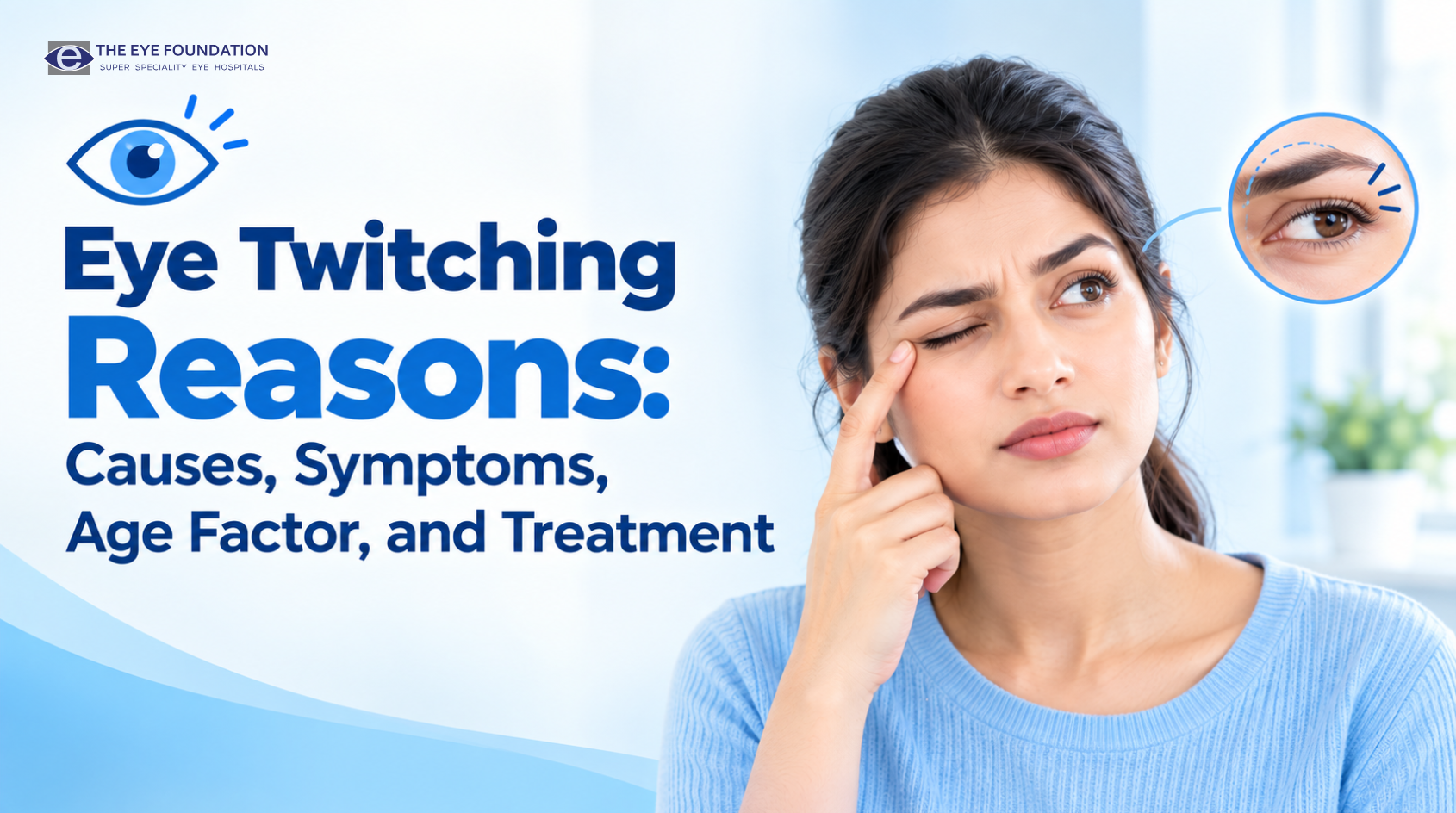
Eye twitching the sudden, uncontrollable flickering of the eyelid is something almost everyone experiences at some point. While usually harmless and temporary, understanding the common eye twitching reasons behind this condition can help you know when it's simply stress-related and when it might need medical attention.
Causes
Eye twitching, medically known as myokymia when mild, is most often linked to everyday lifestyle factors rather than serious illness. Common eye twitching reasons include stress and anxiety, lack of sleep, excessive caffeine or alcohol consumption, eye strain from prolonged screen use, dry eyes, and nutritional imbalances such as low magnesium levels. In rarer cases, eye twitching reasons can be linked to more significant neurological conditions like blepharospasm or hemifacial spasm, though these are far less common and are usually accompanied by other noticeable symptoms.
There is also a well-documented connection between the nervous system and eyelid muscle activity. When the body is under prolonged stress, it releases higher levels of cortisol and adrenaline, which can make small muscle groups including the tiny muscles around the eyelid more prone to involuntary firing. This is one of the reasons stress-related eye twitching reasons often cluster around demanding periods at work, exam seasons for students, or times of disrupted sleep, and why the twitching tends to fade once the underlying stressor is resolved.
Symptoms
Symptom | Description |
Involuntary eyelid flutter | Rapid, repeated twitching of the upper or lower lid |
Occurs in one eye | Usually affects a single eye at a time |
Comes and goes | Episodes can last from seconds to a few minutes |
Worsens with fatigue | Increases when tired, stressed, or over-caffeinated |
Associated eye dryness | Twitching often paired with irritation |
Rarely, full eyelid closure | In severe cases (blepharospasm), the lid may briefly close |
Most people notice these symptoms are mild and resolve on their own without any intervention, but understanding the full range of eye twitching reasons helps in recognizing when it's time to seek professional help rather than waiting it out.
Age Factor
Eye twitching can occur at any age, but its frequency and the underlying eye twitching reasons often shift as people get older. Younger adults typically experience twitching linked to stress, screen time, and lifestyle habits such as poor sleep or high caffeine intake. Middle-aged adults may notice twitching connected to prolonged work stress or magnesium deficiency arising from dietary habits.
In older adults, particularly those above 50, twitching is more likely to be linked to benign essential blepharospasm, a condition that becomes more common with age and may require specialized treatment if it starts interfering with vision or daily activities. Knowing which eye twitching reasons are more typical for your age group can help you decide how much to worry and when.
Treatment
Treatment for eye twitching depends on identifying and addressing the underlying eye twitching reasons:
• Improving sleep quality and getting adequate rest
• Reducing caffeine and alcohol intake
• Managing stress through relaxation techniques or regular exercise
• Using lubricating eye drops if dryness is a contributing factor
• Ensuring balanced nutrition, including magnesium-rich foods like nuts, seeds, and leafy greens
• Taking regular breaks from screens to reduce digital eye strain

For persistent or severe cases, such as blepharospasm, doctors may recommend botulinum toxin (Botox) injections, which temporarily relax the overactive eyelid muscles, or in rare cases, surgical options. These are usually reserved for situations where the everyday eye twitching reasons have been ruled out and the twitching significantly affects daily life.
Home Remedies for Quick Relief
Alongside medical treatment, some simple home remedies can help ease occasional twitching: applying a warm compress to the affected eyelid, gently massaging the area, ensuring 7 to 8 hours of sleep, and cutting back on caffeinated beverages for a few days. These remedies often address the everyday eye twitching reasons without requiring any medical intervention at all.
Normal Twitching vs. Blepharospasm Knowing the Difference
It helps to distinguish ordinary, lifestyle-driven twitching from the less common but more persistent condition called blepharospasm. Ordinary twitching among the everyday eye twitching reasons is typically confined to one eye, comes and goes over a few days, and is closely tied to an obvious trigger such as poor sleep, high caffeine intake, or a stressful week at work. Blepharospasm, by contrast, tends to affect both eyes, progresses gradually over months or years, and can eventually cause forceful, prolonged eyelid closure that interferes with daily activities like driving or reading. Recognizing this distinction early helps people avoid unnecessary worry over ordinary twitching, while ensuring that true blepharospasm cases don't go untreated for years.
When to See a Doctor
While most eye twitching resolves on its own, you should consult a doctor if the twitching lasts for several weeks, spreads to other parts of the face, causes the eyelid to close completely, or is accompanied by other symptoms like facial weakness or drooping as these could point to one of the more serious eye twitching reasons that need medical evaluation.
A well-balanced diet rich in vitamins, antioxidants, and omega-3 fatty acids is one of the simplest ways to support healthy vision at every age. Including the best food for eye health in your daily meals, along with regular eye check-ups at The Eye Foundation, can help maintain good eye health and support the early detection of potential vision problems.