 Tamil Nadu
 Karnataka
 Kerala

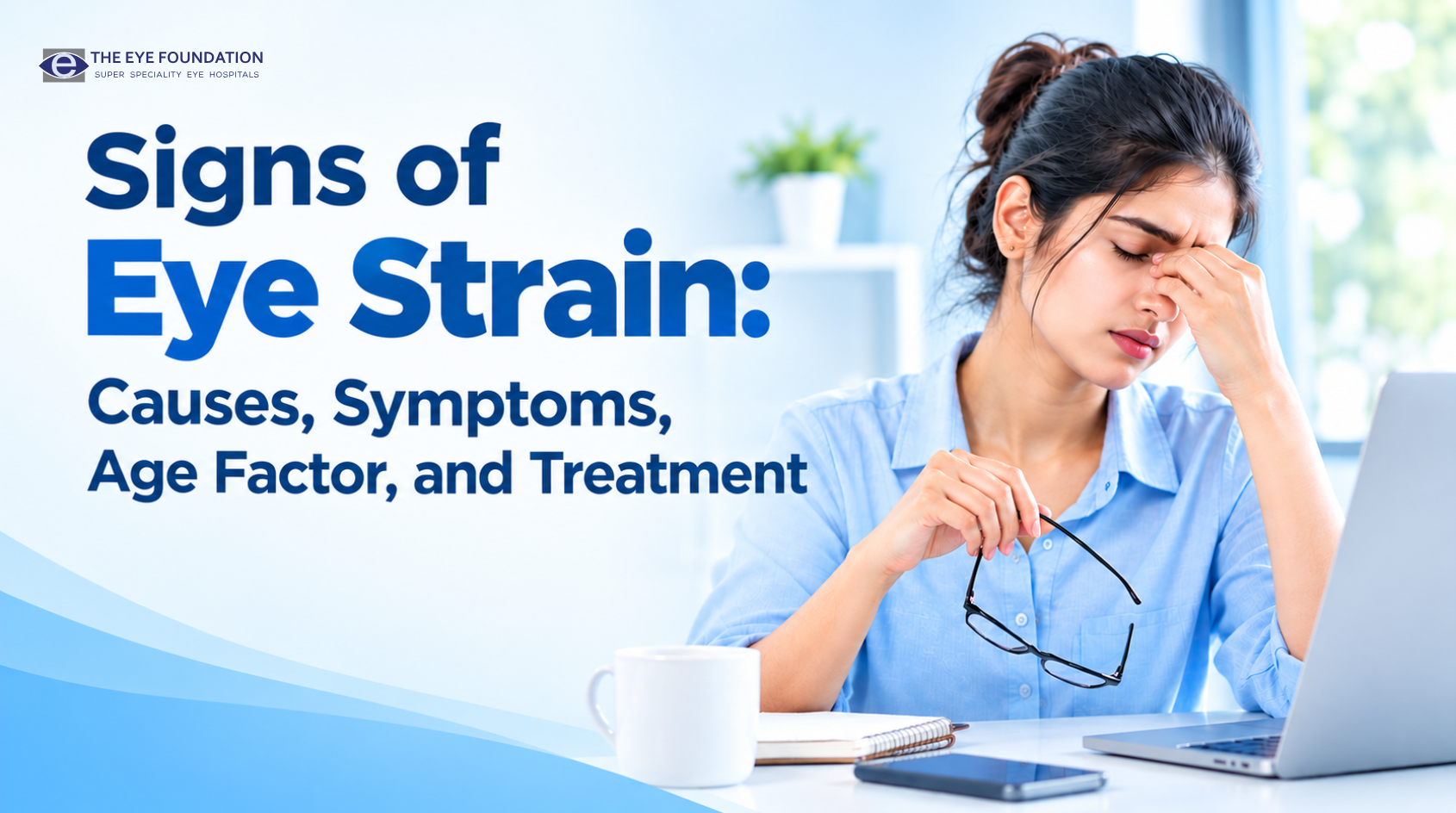
We live in a world where screens are almost impossible to avoid laptops for work, phones for everything else, and late-night reading that often happens in poor lighting. It's no surprise, then, that eye strain has quietly become one of the most common health complaints across every age group. The tricky part is that the signs of eye strain often creep in gradually, so many people brush off the discomfort until it starts affecting daily life. Catching these signs early makes a real difference in avoiding more serious vision problems later. In this article, we'll break down what actually causes eye strain, the key signs of eye strain to look out for, why age plays a bigger role than most people realize, and what treatment options can help bring real relief.
Causes of Eye Strain
Eye strain, medically known as asthenopia, occurs when the eye muscles become fatigued from intense or prolonged use. The most common cause today is extended screen time staring at computers, smartphones, or televisions without adequate breaks. Other causes include reading in dim or overly bright light, driving for long hours, uncorrected vision problems such as undiagnosed nearsightedness, farsightedness, or astigmatism, and exposure to glare from screens or sunlight. Dry, air-conditioned environments can also worsen eye strain by reducing natural tear production, while poor posture sitting too close to a screen or at an awkward angle adds further strain on the eye muscles.
Digital eye strain, also known as computer vision syndrome, has become especially widespread due to remote work and online learning becoming the norm. Screens require constant refocusing as we shift between near and distant objects, which taxes the eye muscles far more than reading a printed page. In addition, people blink up to 50% less often while looking at screens, which speeds up tear evaporation and leads to noticeable dryness alongside the other signs of eye strain.
Symptoms Signs of Eye Strain to Watch For
The signs of eye strain vary from person to person, but several patterns are extremely common:
| Symptom | Description |
| Blurred vision | Difficulty focusing clearly after screen use |
| Headache | Often felt around the forehead or temples |
| Dry or watery eyes | Irritation caused by reduced blinking |
| Difficulty concentrating | General visual fatigue affecting focus |
| Sensitivity to light | Discomfort in bright or glaring settings |
| Neck and shoulder pain | Linked to poor posture during screen use |
In more severe cases, the signs of eye strain can extend to double vision, difficulty keeping the eyes open comfortably, and a general feeling of visual fatigue that doesn't fully improve even after a good night's sleep. Some people also report increased sensitivity to screen flicker or trouble shifting focus between near and far objects. If you notice these signs of eye strain appearing regularly, especially after long working hours, it's a clear signal that your eyes need rest and possibly a professional check-up.

Age Factor
Eye strain can affect people of any age, but the risk factors differ across life stages. Children and teenagers who spend excessive time on mobile phones and tablets for study or entertainment are increasingly showing signs of eye strain at a younger age than before studies suggest average screen time among school-going children has more than doubled over the last decade. Adults in their 20s to 40s, especially those working in IT, content creation, or data entry, are highly prone due to continuous screen exposure throughout the workday.
People above 40 face an additional factor presbyopia, the natural age-related decline in the eye's ability to focus on close objects which can intensify strain symptoms considerably. Older adults are also more likely to have underlying conditions like dry eye syndrome, which compounds the problem further and makes the signs of eye strain more noticeable and longer-lasting.
Treatment
Treatment for eye strain depends on its underlying cause. For most people, simple lifestyle changes are enough to bring relief:
• Following the 20-20-20 rule every 20 minutes, look at something 20 feet away for 20 seconds
• Adjusting screen brightness and using anti-glare filters
• Ensuring proper lighting while reading or working
• Getting a comprehensive eye test to rule out or correct refractive errors
• Using lubricating eye drops for dryness
• Taking regular breaks and blinking consciously during screen use
In cases where the signs of eye strain persist despite these measures, an eye specialist may prescribe corrective glasses particularly ones designed for screen use with blue-light filtering lenses or recommend vision therapy exercises. Simple daily routines such as focus-shifting drills (alternating focus between near and far objects) and palming (covering closed eyes gently with the palms to relax the muscles) are often recommended by optometrists as well.
Prevention
Preventing eye strain largely comes down to habit changes: maintaining proper distance from screens (at least an arm's length), using ergonomic seating, ensuring adequate ambient lighting, and scheduling regular eye check-ups, especially for those working long hours on digital devices.
Certain professions face a higher day-to-day risk of the signs of eye strain simply because of how their work is structured: software developers and data analysts who track multiple monitors for hours at a stretch, customer support staff working back-to-back shifts on a screen, students preparing for exams late into the night, and drivers who spend long hours focusing on the road under changing light conditions. For these groups, scheduling deliberate screen breaks isn't optional it's a practical necessity for avoiding chronic discomfort.
When to See a Doctor
If the signs of eye strain are accompanied by persistent headaches, double vision, or eye pain that doesn't improve with rest, it's important to consult an ophthalmologist at The Eye Foundation promptly, as these could indicate an underlying vision problem that needs correction.
Long-Term Risks If Eye Strain Is Ignored
While the signs of eye strain themselves are not dangerous, repeatedly ignoring them can create secondary problems. Chronic eye strain often leads to poor sleep quality, since sustained close-focus work in the evening delays the body's natural wind-down process. It can also mask an existing refractive error for years, as people simply get used to squinting or holding devices closer instead of getting a proper eye test. Over time, this pattern can encourage poor posture habits a stiff neck or rounded shoulders that persist even after the eyes themselves recover. Professionals who work in fields with heavy screen dependence, such as software development, graphic design, and customer support, are particularly encouraged to treat early signs of eye strain seriously rather than pushing through them.
Eye strain is largely preventable and manageable once you understand its causes and recognize its symptoms early. Paying attention to age-specific risk factors and adopting simple treatment and prevention measures can go a long way in protecting your vision and overall eye comfort. For a personalized evaluation, The Eye Foundation's specialists can help identify the exact cause of your discomfort and recommend the right course of action.