 Tamil Nadu
 Karnataka
 Kerala

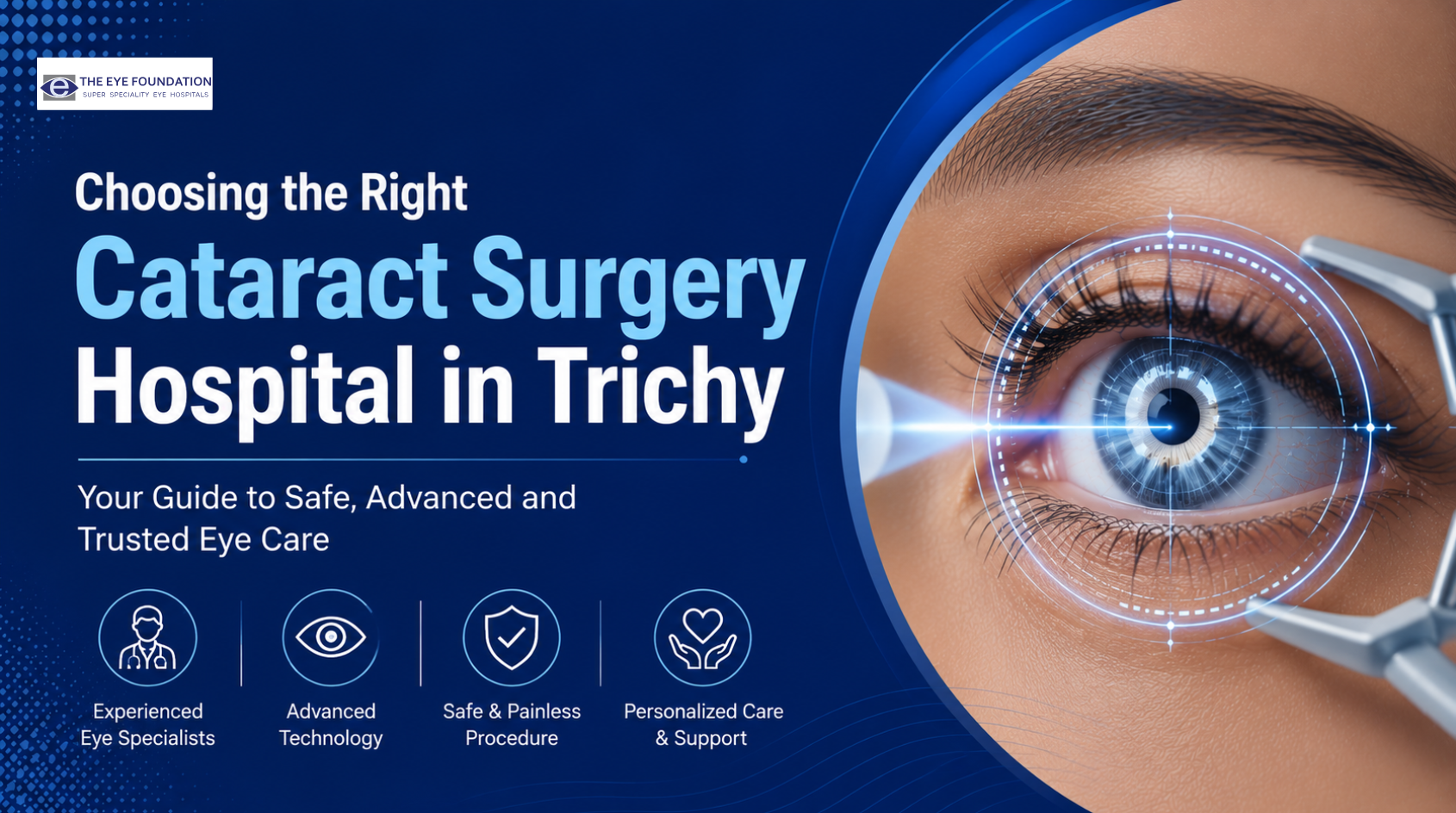
Blurry vision, faded colours, and increasing trouble driving at night are often brushed off as "just getting older," until they start genuinely interfering with everyday life. Cataracts are one of the most common causes of vision decline in adults, and the good news is that treatment today is quick, safe, and highly effective. Finding the right cataract surgery hospital in Trichy is the most important decision you'll make in this entire process, since outcomes depend heavily on both technology and surgical expertise.
Understanding what a cataract actually is
A cataract forms when the eye's natural lens becomes cloudy, most commonly due to ageing, though diabetes, prolonged UV exposure, smoking, and certain medications can accelerate the process. Vision becomes progressively blurred, colours appear duller, and glare from headlights or bright sunlight becomes increasingly bothersome. Unlike some eye conditions, cataracts don't improve or stabilise on their own they continue to progress until treated.
Why the hospital you choose matters so much
Cataract surgery is one of the most commonly performed procedures worldwide, but that doesn't mean every facility delivers the same quality of outcome. A well-equipped cataract surgery hospital in Trichy combines modern surgical technology, experienced ophthalmic surgeons, and strict hygiene protocols to minimise complications and maximise visual results. The difference between an average outcome and an excellent one often comes down to these details.
What modern cataract treatment looks like
- Small-incision phacoemulsification using ultrasonic energy to remove the cloudy lens
- Local anaesthesia, meaning patients remain comfortable and pain-free throughout
- Insertion of an artificial intraocular lens (IOL) tailored to your visual needs
- A procedure typically lasting 15 to 20 minutes per eye
- Same-day discharge for the vast majority of patients
- Minimal downtime, with most people resuming light activity within a day or two
Choosing between different lens options
Not all artificial lenses serve the same purpose, and this choice significantly affects your vision after surgery. Standard monofocal lenses correct distance vision clearly but usually require reading glasses afterward. Premium options, including multifocal and extended depth-of-focus lenses, can reduce or eliminate the need for glasses altogether, though they come at a higher cost. A good surgical team will discuss your daily habits reading, driving, screen use before recommending the most suitable lens.
Questions worth asking before you commit
- How many cataract surgeries does the surgeon perform each year?
- What is their typical complication rate, and how are complications handled?
- What lens options are available, and what do they cost?
- What does the recovery timeline look like for someone in my situation?
- Is emergency support available if something feels off after discharge?
A confident, experienced surgical team should answer these questions clearly and specifically, without vague reassurances or rushed explanations.
What to expect on the day of the procedure
Patients typically arrive a few hours ahead of schedule for preparation, receive numbing eye drops, and undergo the actual surgery in well under half an hour. A brief observation period follows before discharge, along with clear instructions on medicated eye drops, activity restrictions, and warning signs to watch for during recovery. Protective eyewear is usually provided to shield the eye during the initial healing period.
Recovery: what patients can realistically expect
Most patients notice a visible improvement in vision within 24 to 48 hours, with continued stabilisation over the following two to four weeks. Light daily activities can typically resume the next day, though swimming, dusty environments, and strenuous exercise should be avoided for a couple of weeks to reduce infection risk. Follow-up visits are essential during this period to confirm healing is progressing well.
Signs that indicate it might be time for surgery
- Blurred vision that glasses no longer correct effectively
- Increasing glare and halos around lights, especially at night
- Colours appearing faded, yellowed, or less vivid than before
- Frequent changes needed in your eyeglass prescription
- Difficulty with everyday tasks like reading, cooking, or recognising faces
If several of these apply to you, scheduling a consultation at a trusted cataract surgery hospital in Trichy can help determine whether surgery is the right next step or whether continued monitoring is still appropriate.
Evaluating the hospital beyond the surgery itself
- Availability of comprehensive pre-surgical eye evaluation
- Clear, itemised pricing covering surgery, lens, and follow-up visits
- Well-maintained, hygienic operation theatres
- A support team that helps navigate insurance and paperwork
- Positive, consistent patient feedback over an extended period
- Accessible emergency contact for post-surgical concerns
Cost and insurance considerations
Costs vary depending on the lens type chosen and whether the procedure is done on a day-care or inpatient basis. Most standard health insurance policies cover basic cataract surgery with monofocal lenses, though premium lens upgrades often come with additional out-of-pocket costs. A reliable cataract surgery hospital in Trichy should provide a clear, written cost breakdown before the procedure begins, so there are no surprises at discharge.
Life after successful cataract treatment
- Noticeably sharper and clearer vision within days for most patients
- Reduced dependence on glasses, particularly with premium lens choices
- Improved night vision and significantly reduced glare sensitivity
- A quick return to reading, driving, and other daily activities
- Long-lasting results that typically hold for the rest of your life, barring unrelated eye conditions

Cataracts are common, treatable, and shouldn't be left to quietly worsen your quality of life. Choosing the right cataract surgery hospital in Trichy one with experienced surgeons, modern technology, and transparent communication makes the entire process far smoother, from consultation through to full recovery. If blurry vision or glare has been holding you back, it's worth having that conversation sooner rather than later.
Frequently asked questions
1.Is cataract surgery considered a major operation?
No, it's classified as a minor, low-risk procedure by modern medical standards, typically completed in under half an hour with same-day discharge for most patients.
2.Can cataracts return after surgery?
The cataract itself cannot return once the natural lens is removed, though some patients develop a secondary clouding called posterior capsule opacification, easily treated with a quick laser procedure.
3.How soon can I resume driving after surgery?
Most patients can drive again within a few days once vision stabilises and their surgeon confirms it's safe during a follow-up check.
4.Do both eyes need surgery at the same time?
Surgeons typically operate on one eye first, followed by the second a week or two later, to monitor healing and reduce risk before treating both eyes.