 Tamil Nadu
 Karnataka
 Kerala

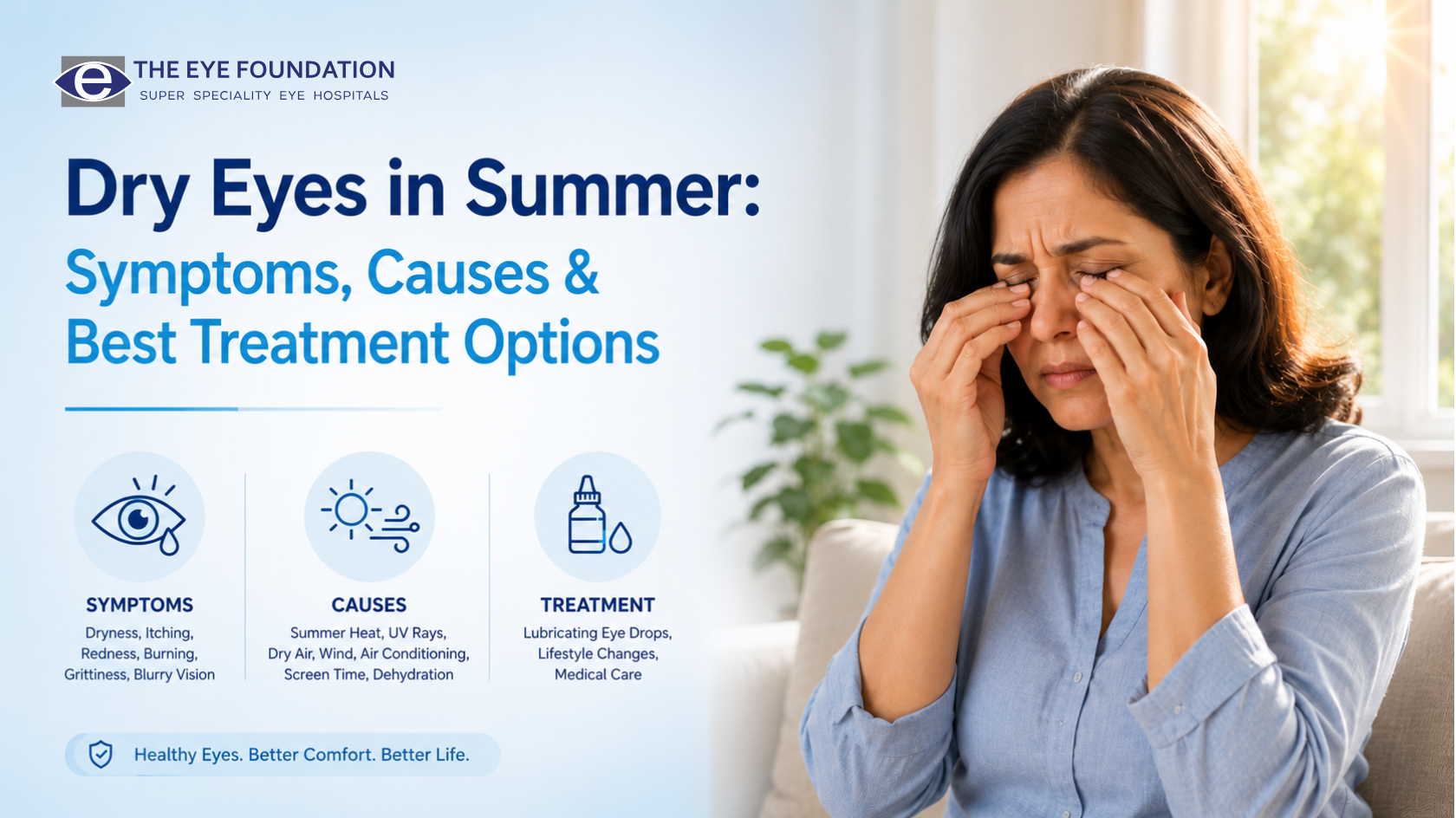
Summer is upon us and while most of us are contending with the heat, your eyes may be silently suffering. If you’ve been feeling gritty, burning or tired in your eyes recently, you’re not alone. The most popular topic of search at our clinic in the warmer months is dry eyes treatment in summer, and for good reason. Heat, air conditioning, and screen time combine to create the perfect storm for dry eye symptoms.
At The Eye Foundation, we see a significant rise in dry eye complaints between March and June. The good news? With the right dry eyes treatment in summer, it's very manageable.
What Are the Symptoms of Dry Eyes?
Dry eyes don't always feel 'dry.' Many patients describe a range of sensations that can be easy to dismiss. Watch out for:
- Burning or stinging sensation especially in the mornings or after screen time
- A gritty feeling, like sand is stuck in your eye
- Redness and irritation that won't go away
- Blurred vision that improves temporarily when you blink
- Excessive tearing (yes, watery eyes can be a sign of dryness your eye overcompensates)
- Sensitivity to light, wind, or smoke
- Difficulty wearing contact lenses
If you're experiencing two or more of these, it's worth getting your eyes checked and starting dry eyes treatment in summer early.
Why do our eyes get dry in summer?
There are also certain triggers associated with summer that can make dry eye symptoms worse:
1. Hot, Dry Air
High temperatures cause your eyes’ tear film to evaporate faster. Dry eyes treatment in summer is a must because less moisture in the air means your eyes lose moisture more quickly than they can replace it.
2. Air Conditioning
We all love AC in summer but it's one of the biggest culprits. Air conditioners strip humidity from indoor air, and sitting directly under a vent makes things significantly worse.
3. Increased Screen Time
People blink 60–70% less when staring at screens. Reduced blinking means the tear film doesn't refresh properly, leading to dry eye irritation in summer.
4. Exposure to UV
The more time you spend outside, the more your eyes are exposed to UV rays, which can damage the surface cells and also upset tear production over time.
5. Swimming in Chlorinated Pools
Chlorine strips away the natural tear film and can irritate the conjunctiva, the clear membrane covering your eye.
6. Dehydration
Not drinking enough water in summer is common and your tear glands are directly affected by how well-hydrated you are.

Best Dry Eyes Treatment Options
The good news is that dry eyes treatment in summer is very effective when started early. Here's what works:
- Artificial Tears & Lubricating Eye Drops
- Use preservative-free drops if you need them more than four times a day.
- Avoid drops that 'remove redness' they can actually worsen dryness over time.
Warm Compresses
Applying a warm, damp cloth to closed eyelids for 5–10 minutes helps unblock the meibomian glands (the tiny glands in your eyelids that produce oil for the tear film).
Prescription Medications
For moderate to severe dry eyes, your doctor may prescribe anti-inflammatory drops like cyclosporine. At The Eye Foundation, we evaluate each patient individually before recommending prescription therapy as part of dry eyes treatment in summer.
Punctal Plugs
These are tiny, painless plugs inserted into the tear ducts to slow tear drainage keeping your natural tears on the eye surface longer.
Omega-3 Supplements
Studies show that omega-3 fatty acids (found in fish oil) can improve the quality of the tear film. Ask your doctor if these are right for you.
Summer tips to prevent dry eyes
- Use UV-blocking wrap-around sunglasses outdoors
- Use a humidifier indoors especially in AC rooms
- Follow the 20-20-20 rule: every 20 minutes, look 20 feet away for 20 seconds.
- Stay hydrated – drink at least 8 glasses of water per day
- Don’t sit directly under the A/C.
- Don't rub your eyes if they are irritated
- Remove contact lenses before going swimming
Follow these simple steps to help your dry eyes treatment in summer and prevent symptoms from getting worse.
Dry eyes in the summer are common, but they don’t have to be your normal. If you are experiencing mild irritation and more persistent symptoms, early care and proper dry eyes treatment in summer makes a big difference. At The Eye Foundation, our specialists are committed to giving your eyes the care they deserve with treatment plans that are tailored to suit your lifestyle.
Frequently Asked Questions
Q1. Will dry eyes worsen in summer even if I do not step out?
Definitely. During summer, indoor factors such as air conditioning, fans and increased screen time are a major cause of dry eye symptoms.You don't need to be outside for your eyes to feel the effects, and dry eyes treatment in summer may still be required.
Q2. Are over-the-counter eye drops safe to use every day?
Preservative-free lubricating drops are generally safe for daily use.But don’t use reddening-relief drops too often as they can cause rebound redness. It is always advisable to consult an eye specialist before beginning any eye drop regimen.
Q3. When should I see a doctor for my dry eyes?
See a doctor if symptoms last more than a week, affect your vision or are severe enough to interfere with your daily activities.The Eye Foundation offers a complete dry eye evaluation and recommends the right dry eye treatment for the summer.
Q4.Is dry eye a lifelong condition?
Not necessarily.Many cases are seasonal or lifestyle related and get better with proper care. Most patients will find significant relief with an appropriate treatment plan . Chronic dry eye may require ongoing management .