 Tamil Nadu
 Karnataka
 Kerala

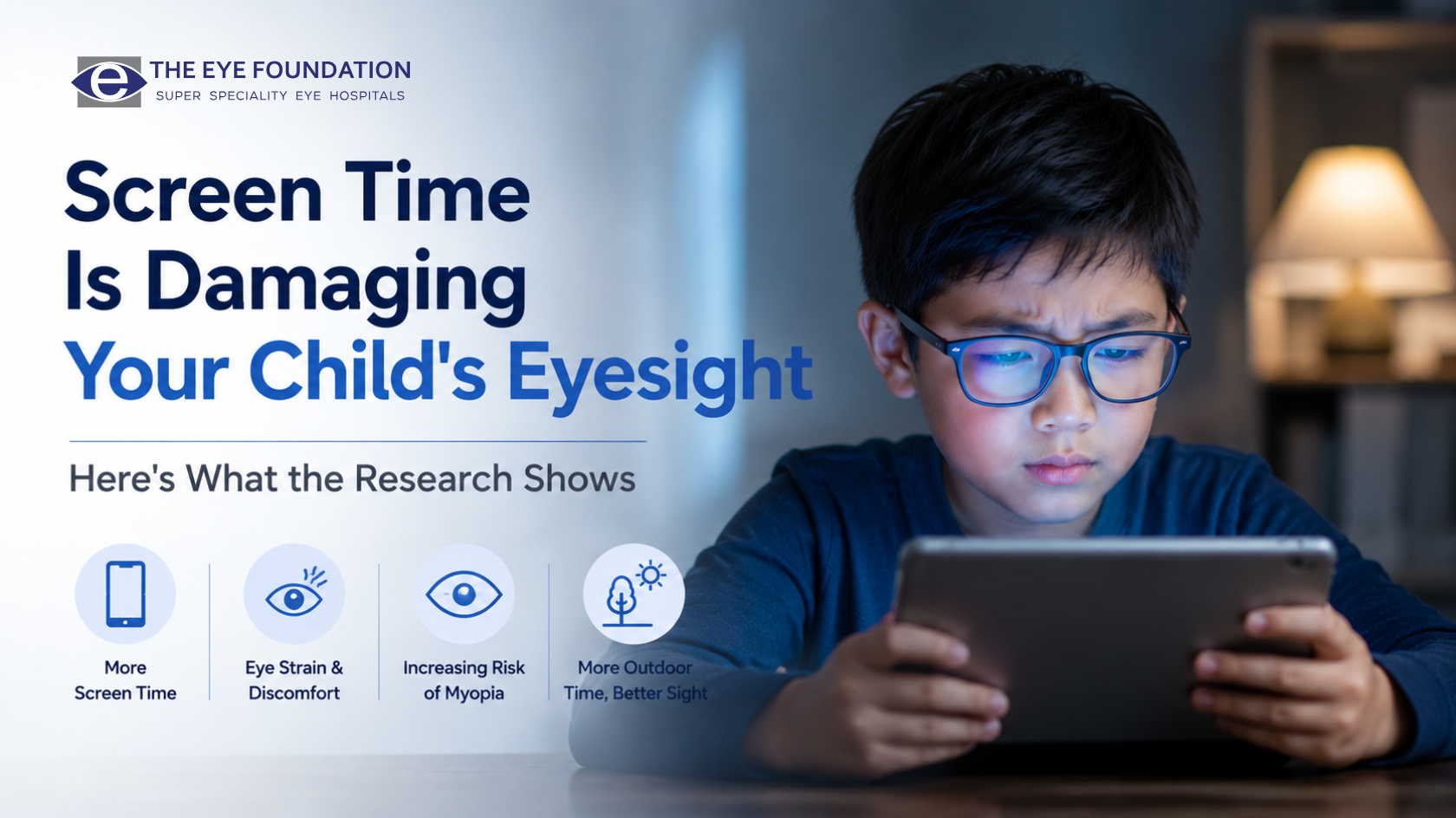
Most parents know that too much screen time isn't good for children. But the impact goes beyond posture and sleep screen time and myopia are now firmly linked by research across multiple countries. Children today are spending more hours in front of digital devices than any previous generation, and the rate of myopia progression is tracking alongside it. At The Eye Foundation, we see this connection playing out in consultations every week. Understanding exactly how screens affect your child's eyes and what you can do about it is one of the most important things you can do for their long-term vision health.
Signs of Digital Eye Strain in Children
- Digital eye strain often precedes or accompanies the development of myopia. Look for:
- Eyes that look red or feel irritated after screen use
- Complaints of blurred vision during or after screen time
- Frequent headaches, particularly around the forehead and temples
- Difficulty concentrating on homework after a long day of screens
- Unusual sensitivity to light
- Excessive blinking or eye rubbing
- These symptoms don't always mean myopia is present, but they're a clear signal that the eyes are under strain and a professional evaluation is needed.

How to Protect Your Child's Eyes From Screen Damage
The goal isn't to eliminate screens that's neither realistic nor necessary. The goal is to manage screen use in a way that protects your child's developing eyes.
Practical, evidence-based steps:
- Follow the 20-20-20 rule religiously every 20 minutes, 20 feet away, for 20 seconds
- Maintain proper screen distance at least 40–50 cm from the face for tablets and computers
- Reduce screen brightness to a comfortable level and avoid screens in dark rooms
- Prioritise outdoor time aim for at least 90 minutes daily in natural light
- Establish screen-free periods particularly in the hour before bedtime
- Position screens at eye level or slightly below not looking up at a screen causes more strain
- Use blue light filter settings on devices, especially in the evening
Myopia Progression Why It Matters
A common misconception is that myopia is simply an inconvenience corrected by glasses. In reality, high myopia where the prescription becomes very strong carries genuine health risks. Severely myopic eyes have a higher risk of retinal detachment, glaucoma, and macular degeneration later in life. This is why controlling myopia progression in childhood, before the prescription climbs too high, is a genuine clinical priority not just a comfort measure.
And with screen time and myopia increasingly linked in children today, the urgency around early intervention has never been greater.
At The Eye Foundation, our myopia management programme is designed to slow progression using a combination of specialised lenses, atropine therapy, and lifestyle guidance individualised to each child.
When to Bring Your Child In
If your child uses screens for more than three hours a day which describes most school-age children today an annual eye examination is not optional, it's essential. Bring them in sooner if you notice any of the symptoms listed above.
The Eye Foundation offers comprehensive paediatric eye assessments. Book your child's appointment today.
FAQ's
1.What is the connection between screen time and myopia?
Prolonged near focus which is what screens demand keeps the eye muscles under constant strain and may cause the eyeball to elongate over time. This elongation is the physical basis of myopia. The more hours spent on screens without breaks, the greater the risk of development and progression.
2.When does screen-related myopia typically start?
It can begin as early as age six or seven, particularly in children who start using digital devices heavily before their eyes have fully developed.This is the period of maximum risk in the years of primary school.
3.How can I reduce my child's risk of myopia from screen use?
At The Eye Foundation, the best combination is structured screen breaks, daily outdoor time, proper device distance and regular eye check-ups.
4.What devices are hardest on the eyes?
Smartphones also put the most strain on the eyes because they are held nearest to the face. Tablets and computers are a little better, but still need careful handling. Television, watched from a proper distance, is generally the least concerning.
5.Who should perform my child's myopia check?
A qualified paediatric ophthalmologist or optometrist experienced in myopia management and digital eye strain the team at The Eye Foundation includes specialists in both.