

 Tamil Nadu
 Karnataka
 Kerala

What to Look for in an Eye Care Specialist in Chennai
Blurry vision that glasses no longer fix, a parent’s cataract that keeps getting worse, a child who squints at the board, or a diabetes diagnosis that means yearly retina checks: most people start looking for an eye specialist because something has changed. Chennai has hundreds of eye clinics, and they differ widely in training, equipment and aftercare.
This guide covers what to check before you book, which specialist suits which problem, and what to ask at your first visit. We use our own practice at The Eye Foundation as the example throughout.
Why choosing the right eye specialist matters
Eye care is highly specialised. A general ophthalmologist can diagnose most problems, but a retinal detachment, advanced glaucoma or a keratoconus cornea needs a surgeon who treats that condition every week. Choosing well means:
- An accurate diagnosis early. Glaucoma and early diabetic retinopathy often have no symptoms until vision is already lost.
- The right treatment option. Not every patient suits every LASIK or cataract lens option.
- Safer surgery and recovery. Infection control, modern equipment and structured follow-up all reduce complications.
8 things to look for in an eye care specialist
1. Qualifications and training
Look for an MS or DNB in Ophthalmology, ideally with fellowship training in a subspecialty. Ask where the surgeon trained and how long they have practised.
At The Eye Foundation, our surgeons are subspecialty-trained, several of them internationally, and our hospital also trains the next generation through DNB and fellowship programmes.
2. The right subspecialty for your problem
Make sure the doctor focuses on your condition, such as cornea, retina, glaucoma, paediatrics or refractive surgery (see the table below).
We run dedicated subspecialty departments, so a retina patient sees a retina specialist, not a generalist.
3. Hospital accreditation
NABH accreditation means a hospital has been independently assessed on patient safety, infection control and clinical processes.
The Eye Foundation is NABH-accredited.
4. Diagnostic and surgical technology
Good diagnosis depends on equipment. Look for:
- 3D OCT for the retina and optic nerve
- Corneal topography before LASIK
- Fundus photography
- Modern surgical platforms, such as Phaco/MICS for cataract and SMILE or Contoura for vision correction
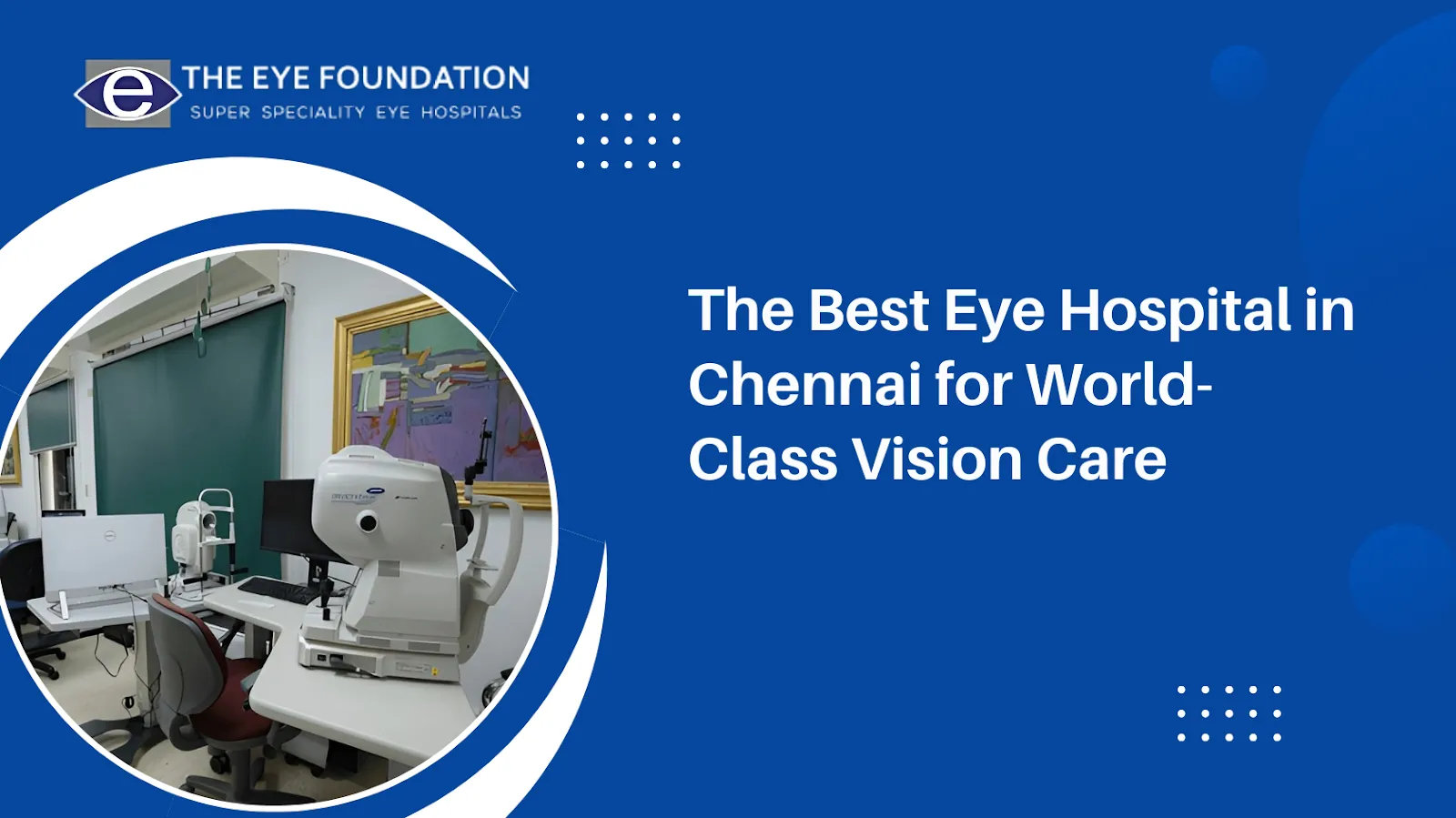
Our centres use 3D OCT, fundus photography and corneal topography, with modern operating theatres for day-care surgery.
5. Experience with your specific procedure
Ask how often the surgeon performs your surgery and which options they offer. For cataract, for example, check whether they offer monofocal, multifocal, toric and EDOF lenses, not just one.
6. Transparent costs and insurance
You should get a clear estimate before surgery, including the lens, the procedure and follow-up. Check whether the hospital offers cashless treatment with your insurer or TPA.
We are empanelled with major insurers and TPA networks for cashless treatment of eligible procedures, and we share costs upfront.
7. Follow-up and emergency access
Recovery matters as much as surgery. Ask:
- How many follow-up visits are included?
- Who do I call if something feels wrong at night or on a weekend?
8. Patient reviews and communication
Read recent Google reviews, but also notice how the doctor explains things. A good specialist explains your options, risks and recovery in plain language and doesn’t rush you into a decision.
Match the specialist to your eye problem
| Your concern | Specialist to see | Common treatments |
|---|---|---|
| Cloudy vision, glare, cataract | Cataract surgeon | Phacoemulsification with monofocal, multifocal, toric or EDOF lens |
| Want to stop wearing glasses | Refractive (LASIK) surgeon | Contoura LASIK, SMILE, PRK |
| Diabetes, floaters, flashes, retinal problems | Retina specialist | Diabetic retinopathy care, retinal detachment and macular hole surgery |
| High eye pressure, family history of glaucoma | Glaucoma specialist | Visual field and OCT tests, drops, SLT laser, MIGS |
| Child’s squint, lazy eye, poor vision | Paediatric ophthalmologist | Squint correction, amblyopia therapy, paediatric cataract, ROP screening |
| Keratoconus, corneal infection, dry eye | Cornea specialist | Keratoconus treatment, corneal transplant, dry eye therapy |
Questions to ask at your first consultation
- What exactly is my diagnosis, and how advanced is it?
- What are all my treatment options, including not treating it yet?
- Why do you recommend this option for me specifically?
- How many of these procedures do you perform?
- What is the total cost, and what does my insurance cover?
- What does recovery look like, and how many follow-ups are included?
- What warning signs after treatment should make me call you immediately?
7 eye health tips from our ophthalmologists
- Get a comprehensive eye exam every year. Glaucoma and early diabetic retinopathy often cause no symptoms.
- Follow the 20-20-20 rule. Every 20 minutes of screen time, look at something 20 feet away for 20 seconds.
- Wear 100% UV-blocking sunglasses outdoors.
- If you have diabetes, get a dilated retina exam about every six months.
- Eat for your eyes. Leafy greens, colourful vegetables, eggs, nuts and oily fish all help.
- Don’t ignore warning signs. Sudden vision loss, a shadow across your vision, new floaters, flashes of light or persistent redness need an eye specialist immediately.
- Practise contact lens hygiene. Never sleep in lenses, never rinse them with tap water, and replace them as directed.
Prevention is always the best medicine, especially when it comes to your eyes.
Book a consultation at our Vadapalani centre
If you’re unsure which specialist you need, start with a comprehensive eye examination and our team will guide you from there. Visit our eye hospital in Vadapalani for subspecialty care, NABH-accredited safety and cashless insurance support in Chennai.
Frequently asked questions
1.How do I choose a good eye specialist in Chennai?
Check the doctor’s qualifications (MS/DNB Ophthalmology plus fellowship training) and that their subspecialty matches your problem. Look for NABH accreditation, modern diagnostic equipment, transparent pricing with insurance support, and clear follow-up care. Recent patient reviews and how well the doctor explains your options are also good signs.
2.What qualifications should an ophthalmologist have?
An ophthalmologist should hold an MBBS followed by an MS or DNB in Ophthalmology. For complex conditions such as retina, cornea, glaucoma or paediatric eye problems, look for additional fellowship training in that subspecialty.
3.Should I see an optometrist or an ophthalmologist?
An optometrist tests vision and prescribes glasses or contact lenses. An ophthalmologist is a medical doctor who diagnoses and treats eye diseases and performs surgery. See an ophthalmologist for pain, redness, sudden vision changes, cataract, glaucoma, diabetes-related eye checks, or if you are considering LASIK.
4.When should I see a retina or cornea specialist instead of a general eye doctor?
See a retina specialist if you have diabetes, new floaters or flashes, a shadow in your vision, or have been told you have macular or retinal disease. See a cornea specialist for keratoconus, a corneal infection or scar, severe dry eye, or if you may need a corneal transplant. A general ophthalmologist can refer you.
5.Does The Eye Foundation accept health insurance?
Yes. We are empanelled with all major insurance companies and TPA networks for cashless treatment of eligible procedures, including cataract surgery, under standard health policies.


